Participatory Community Product Development Model of the Herbal Compress Producer Group in Ban Khlong Subdistrict, Mueang District, Phitsanulok Province
Article Sidebar
Main Article Content
Abstract
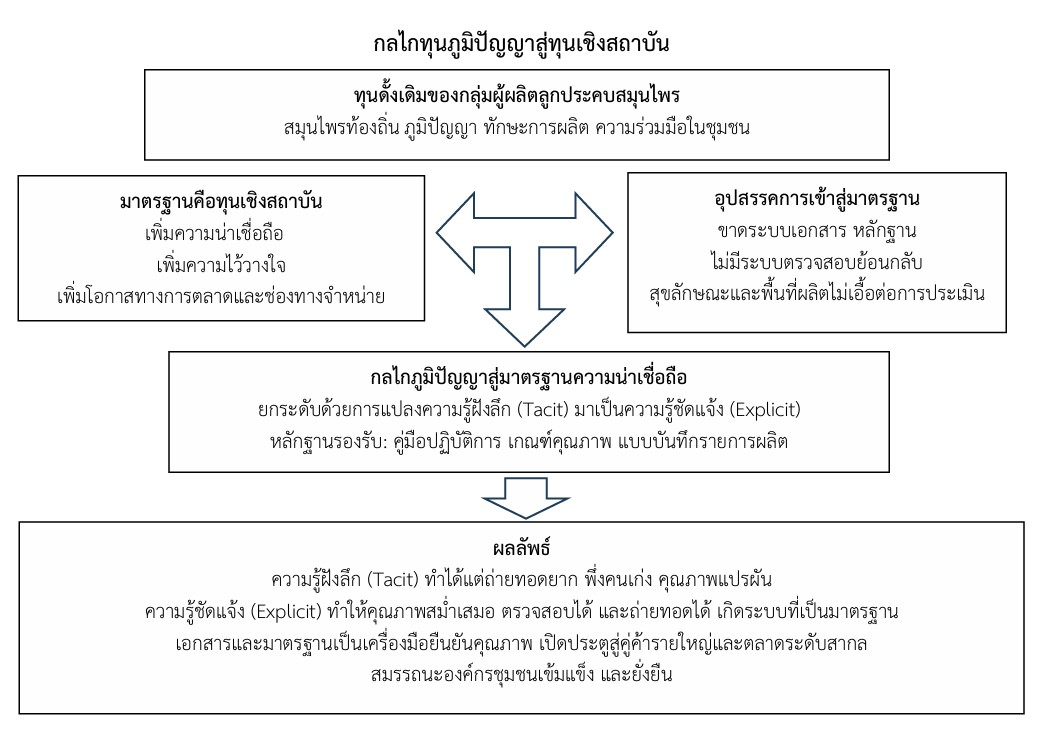
This research article aims (1) to investigate the problems and needs of the herbal compress producer group in Ban Khlong Subdistrict and (2) to examine approaches for developing the group’s community products in accordance with the Community Product Standard. This study employed a qualitative research design. Data were collected through in-depth interviews with 12 key informants, including local leaders, core leaders and members of the group, as well as government officials. Research instruments included a semi-structured interview guide, supporting documents, and focus group discussions. Data were analyzed using content analysis. The findings revealed that (1) the group’s problems and needs were systemic in nature, encompassing the readiness of production facilities and hygiene, consistency of formulas and production processes, quality control, preparation of verifiable documentation and evidence, as well as marketing development and credibility building. Although the group possessed local herbal resources and traditional knowledge as its foundational capital, it still faced structural gaps in the work systems required for standard compliance and sustainable market expansion. (2) The appropriate development approach involved participatory development integrated with systemic improvement. This focused on enhancing group capacity through clear role definitions, the establishment of group standards and Standard Operating Procedures, and the definition of quality control points and production recording to support traceability. Furthermore, it included improving hygiene and production zoning to mitigate contamination risks, along with developing labels and packaging that reflect the community’s identity while complying with the Community Product Standard. These efforts led to consistent product quality, readiness for official assessment, institutional credibility, and the potential to access broader market channels in the long term. The findings of this study provide a development model that enhances the readiness of community enterprises for the Community Product Standard certification and strengthens the local economy through the sustainable use of innovation based on local wisdom.
Article Details

This work is licensed under a Creative Commons Attribution-NonCommercial-NoDerivatives 4.0 International License.
References
จุฑารัตน์ แวดล้อม. (2567). การพัฒนารูปแบบการให้บริการประคบสมุนไพรเพื่อลดอาการปวดหลังส่วนล่างในหญิงตั้งครรภ์แรก ที่มีอายุครรภ์ไตรมาสที่ 3. วารสารอนามัยสิ่งแวดล้อมและสุขภาพชุมชน, 9(6), 569–578.
ชนิกานต์ กุมมาร, ชลภิชา ป๋าเมืองมูล, ขจรศักดิ์ วงศ์วิราช และ อัจฉรา เมฆสุวรรณ. (2567). ผู้ประกอบการในจังหวัดลำปาง: การตลาดออนไลน์และสินค้าหนึ่งตำบลหนึ่งผลิตภัณฑ์ ที่ได้รับการรับรองคุณภาพผลิตภัณฑ์ชุมชน. Lanna Academic Journal of Social Science, 1(1), 66-73.
ณฐาพัชร์ วรพงศ์พัชร์. (2567). การปฏิบัติการวิจัยอย่างมีส่วนร่วมเพื่อพัฒนาการจัดการตลาดดิจิทัล กลุ่มวิสาหกิจชุมชนกลุ่มอาชีพทรงคนอง พริกแกงครัวคนอง ตำบลทรงคนอง อำเภอสามพราน จังหวัดนครปฐม. วารสารวิทยาการจัดการและการบัญชี, 3(1), 65–86.
ธนภูมิ เครื่องทิพย์. (2563). มาตรฐานผลิตภัณฑ์ชุมชน (มผช.) : ความเชื่อมั่นและผลลัพธ์ด้านการยกระดับคุณภาพผลิตภัณฑ์. (รัฐประศาสนศาสตรมหาบัณฑิต, จุฬาลงกรณ์มหาวิทยาลัย).
พรรณี พิมพ์โพธิ์, เทอดเกียรติ แก้วพวง และ ปิยะพงษ์ ยงเพชร. (2565). การพัฒนาตลาดสินค้าสมุนไพรแปรรูปประเภทน้ำมันนวดสปายุคดิจิทัลผ่านรูปแบบตลาดออนไลน์ ด้วยกระบวนการแบบมีส่วนร่วมของกลุ่มวิสากิจชุมชนเครื่องหอม จังหวัดสระแก้ว. RMUTL Journal of Socially Engaged Scholarship, 6(2), 75-85.
ภีมภณ มณีธร, ศิริจันทร์ เชื้อสุวรรณ, พัชรินทร์ อุดมจรัสเดช, วรมรรณ นามวงศ์, รัชนี เสาร์แก้ว, ภูริวัจฐ์ ชีคำ, และ ครองจิต วรรณวงศ์. (2568). การพัฒนาความเข้มแข็งของวิสาหกิจชุมชนอย่างยั่งยืนด้วยวิธีคิดแบบผู้ประกอบการ. วารสารวิทยาการจัดการและการสื่อสาร, 4(1), 95–122.
เมริกา พลังเดช และ ปาริชาติ ช้วนรักธรรม. (2568). การจัดการผลิตภัณฑ์วิสาหกิจชุมชนสินค้าเกษตรและแปรรูป บ้านสามแยก ตำบลลำโพ อำเภอบางบัวทอง จังหวัดนนทบุรี. วารสารศิลปะศาสตร์ราชมงคลพระนคร, 5(1), 66-79.
วิภาพร องคนุสสรณ์ และ เฉลิมรัช ประเสริฐสังข์. (2565). การพัฒนาแนวทางในการดำเนินงานของวิสาหกิจชุมชนเข้าสู่มาตรฐานการผลิตอาหารที่ดี กรณีศึกษา: วิสาหกิจชุมชนกลุ่มแม่บ้านเกษตรกรบ้านกองนาง อำเภอท่าบ่อ. วารสารอนามัยสิ่งแวดล้อมและสุขภาพชุมชน, 6(3), 72–80.
ศรวัสย์ สมสวัสดิ์, ธนโชค ธิเขียว และ เจนนภนต์ ภาคภูมิ. (2568). แนวทางการพัฒนาวิสาหกิจชุมชนอย่างยั่งยืน: กรณีศึกษา กลุ่มแปรรูปข้าวและผลไม้น่าน. Lanna Academic Journal of Social Science, 2(2), 1–17.
สมภพ ระงับทุกข์ และ สุกิจ ชัยมุสิก. (2567). การสร้างนวัตกรรมเพื่อความยั่งยืน: บทบาทของชุมชนในการแก้ไขปัญหาสังคม. วารสารนวัตกรรมสังคมศาสตร์, 1(5), 45-54.
สุพาดา สิริกุตตา. (2566). แนวทางการพัฒนาวิสาหกิจชุมชนอย่างยั่งยืน: กรณีศึกษา วิสาหกิจชุมชนแปรรูปผลไม้บ้านยาวี จังหวัดเพชรบูรณ์. วารสารสังคมศาสตร์ มหาวิทยาลัยศรีนครินทรวิโรฒ, 26(1), 89-104.
อรุณ ชาญชัยเชาว์วิวัฒน์, สุวินัย เกิดทับทิม และ สมเกียรติ พรพิสุทธิมาศ. (2562). มาตรฐานผลิตภัณฑ์อาหารชุมชน. วารสารหน่วยวิจัยวิทยาศาสตร์ เทคโนโลยี และสิ่งแวดล้อมเพื่อการเรียนรู้, 10(1), 137-149.
อำภาภัทร์ วสันต์สกุล และ เมทยา อิ่มเอิบ. (2568). การพัฒนาบรรจุภัณฑ์และตราสัญลักษณ์ผลิตภัณฑ์ เพื่อเชื่อมโยงการท่องเที่ยว เชิงวัฒนธรรมของชุมชนตำบลทรัพย์ไพวัลย์ อำเภอเอราวัณ จังหวัดเลย. วารสารการบริหาร การจัดการ และการพัฒนาที่ยั่งยืน, 3(3), 1274–1284.
Suwanmaneepong, S., Llones, C., Kerdsriserm, C., Khermkhan, J., Sabaijai, P. E., Samanakupt, T., Kaewtaphan, P., Chourwong, P., Mankeb, P., & Dana, L.-P. (2024). Participatory value chain development. Insights from community-based enterprise in rural Thailand. International Journal of Agricultural Sustainability, 22(1), 2371703.
