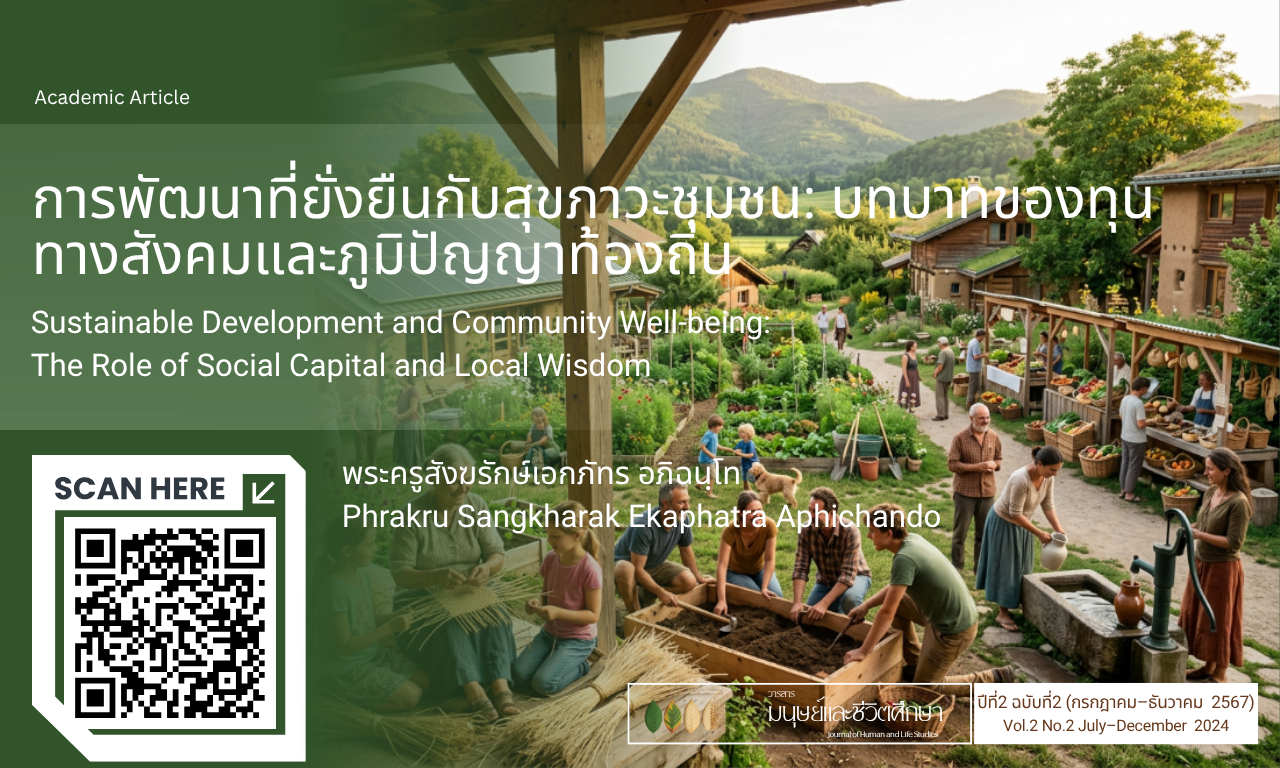
การพัฒนาที่ยั่งยืนกับสุขภาวะชุมชน: บทบาทของทุนทางสังคม และภูมิปัญญาท้องถิ่น
Sustainable Development and Community Well-being: The Role of Social Capital and Local Wisdom
บทคัดย่อ
บทความวิชาการนี้มุ่งศึกษาความสัมพันธ์ระหว่างการพัฒนาที่ยั่งยืน สุขภาวะชุมชน ทุนทางสังคม และภูมิปัญญาท้องถิ่น ในฐานะองค์ประกอบที่เชื่อมโยงและเสริมซึ่งกันและกันในกระบวนการสร้างความเจริญรุ่งเรืองของชุมชนอย่างยั่งยืน โดยบูรณาการกรอบแนวคิดจาก Robert Putnam ด้านทุนทางสังคม Amartya Sen ด้านศักยภาพและการพัฒนามนุษย์ Elinor Ostrom ด้านการจัดการทรัพยากรส่วนรวม และนักวิชาการด้านการพัฒนาชุมชนในบริบทเอเชียตะวันออกเฉียงใต้ ผลการวิเคราะห์พบว่าชุมชนที่มีสุขภาวะและความยั่งยืนสูงมักเป็นชุมชนที่สามารถบูรณาการภูมิปัญญาท้องถิ่นเข้ากับความรู้สมัยใหม่ได้อย่างสมดุล มีทุนทางสังคมที่เข้มแข็งในรูปของความไว้วางใจและเครือข่ายความร่วมมือ และมีกลไกการมีส่วนร่วมของชุมชนในการตัดสินใจที่ส่งผลต่อวิถีชีวิต บทความเสนอแนวทางการพัฒนาชุมชนแบบองค์รวมที่นำไปประยุกต์ใช้ได้ในบริบทชุมชนไทย
เอกสารอ้างอิง
Arnstein, S. R. (1969). A ladder of citizen participation. Journal of the American Institute of Planners, 35(4), 216–224.
Brundtland, G. H. (Ed.). (1987). Our common future: Report of the World Commission on Environment and Development. Oxford University Press.
Chambers, R. (1994). Participatory rural appraisal (PRA): Analysis of experience. World Development, 22(9), 1253–1268.
Intergovernmental Science-Policy Platform on Biodiversity and Ecosystem Services. (2019). Global assessment report on biodiversity and ecosystem services. IPBES.
Kretzmann, J. P., & McKnight, J. L. (1993). Building communities from the inside out: A path toward finding and mobilizing a community’s assets. ACTA Publications.
Nussbaum, M. C. (2011). Creating capabilities: The human development approach. Harvard University Press.
Ostrom, E. (1990). Governing the commons: The evolution of institutions for collective action. Cambridge University Press.
Putnam, R. D. (1993). Making democracy work: Civic traditions in modern Italy. Princeton University Press.
Putnam, R. D. (2000). Bowling alone: The collapse and revival of American community. Simon & Schuster.
Sen, A. (1999). Development as freedom. Oxford University Press.
United Nations. (2015). Transforming our world: The 2030 agenda for sustainable development. UN.
UNESCO. (2013). The Hangzhou declaration: Placing culture at the heart of sustainable development policies. UNESCO.
สมศักดิ์ สามัคคีธรรม. (2564). ทุนทางสังคมกับการพัฒนาชุมชนที่ยั่งยืน: กรณีศึกษาชุมชนลุ่มน้ำในภาคเหนือของประเทศไทย. วารสารพัฒนาชุมชนและคุณภาพชีวิต, 9(3), 789–804.
วิชัย โถสุวรรณจินดา. (2563). ภูมิปัญญาท้องถิ่นกับการจัดการทรัพยากรธรรมชาติในชุมชน: บทเรียนจากชุมชนชาติพันธุ์ในภาคเหนือประเทศไทย. วารสารสังคมลุ่มน้ำโขง, 16(2), 45–68.
สำนักงานสภาพัฒนาการเศรษฐกิจและสังคมแห่งชาติ. (2566). แผนพัฒนาเศรษฐกิจและสังคมแห่งชาติ ฉบับที่ 13 (พ.ศ. 2566–2570). สภาพัฒนาการเศรษฐกิจและสังคมแห่งชาติ.
ดาวน์โหลด
เผยแพร่แล้ว
รูปแบบการอ้างอิง
ฉบับ
ประเภทบทความ
สัญญาอนุญาต
ลิขสิทธิ์ (c) 2024 วารสารมนุษย์และชีวิตศึกษา

อนุญาตภายใต้เงื่อนไข Creative Commons Attribution-NonCommercial-NoDerivatives 4.0 International License.
บทความที่ได้รับการตีพิมพ์เป็นลิขสิทธิ์ของวารสารมนุษย์และชีวิตศึกษา
ข้อความที่ปรากฏในบทความแต่ละเรื่องในวารสารวิชาการเล่มนี้เป็นความคิดเห็นส่วนตัวของผู้เขียนแต่ละท่านไม่เกี่ยวข้องกับวารสารชีวิตศึกษา และกองบรรณาธิการท่านอื่นๆ ในสำนักพิมพ์ฯ แต่อย่างใด ความรับผิดชอบองค์ประกอบทั้งหมดของบทความแต่ละเรื่องเป็นของผู้เขียนแต่ละท่าน หากมีความผิดพลาดใดๆ ผู้เขียนแต่ละท่านจะรับผิดชอบบทความของตนเองแต่ผู้เดียว