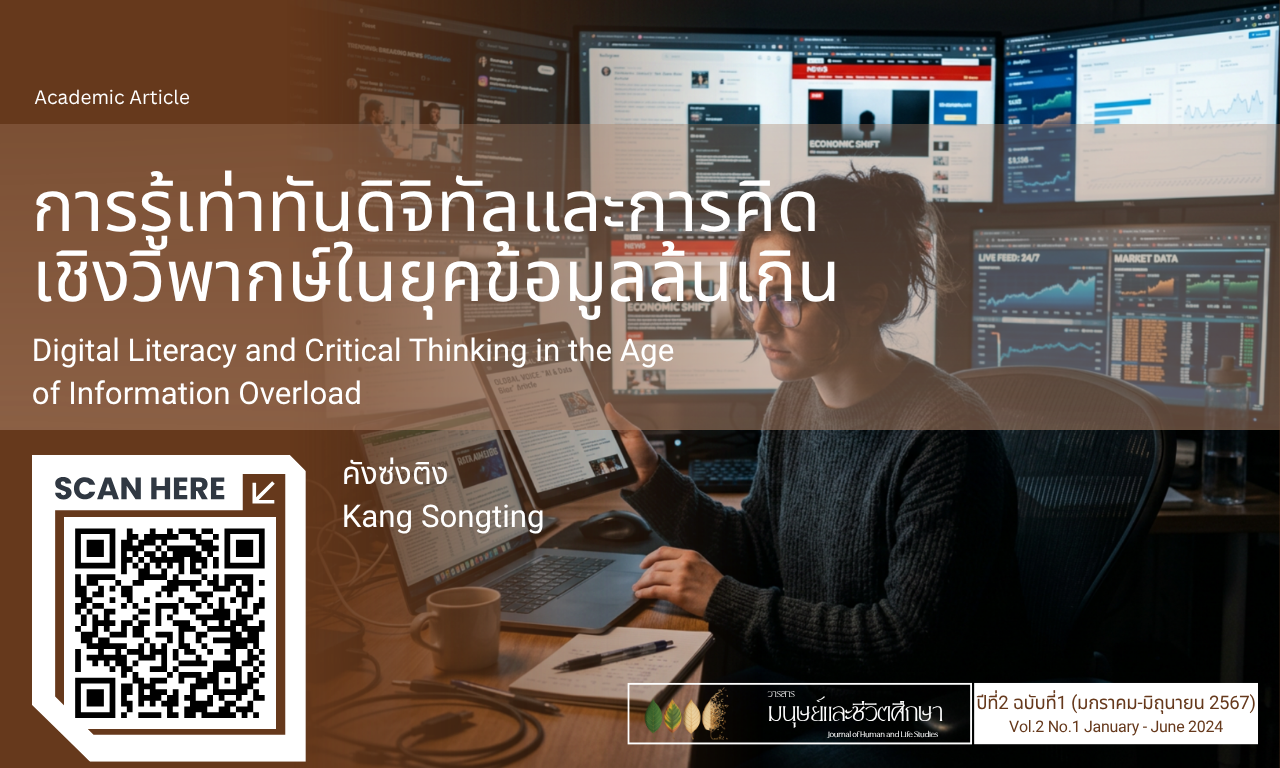
การรู้เท่าทันดิจิทัลและการคิดเชิงวิพากษ์ในยุคข้อมูลล้นเกิน
Digital Literacy and Critical Thinking in the Age of Information Overload
คำสำคัญ:
การรู้เท่าทันดิจิทัล, การคิดเชิงวิพากษ์, ข้อมูลล้นเกิน, ข่าวปลอม, สมรรถนะศตวรรษที่ 21บทคัดย่อ
บทความวิชาการนี้มุ่งศึกษาความสัมพันธ์ระหว่างการรู้เท่าทันดิจิทัล (Digital Literacy) และการคิดเชิงวิพากษ์ (Critical Thinking) ในฐานะสมรรถนะสำคัญที่มนุษย์จำเป็นต้องพัฒนาเพื่อดำรงชีวิตอย่างมีประสิทธิภาพในยุคข้อมูลล้นเกิน (Information Overload) ซึ่งเป็นลักษณะเด่นของโลกในศตวรรษที่ 21 บทความนำเสนอกรอบแนวคิดที่ผสมผสานทฤษฎีการรู้สารสนเทศของ American Library Association ทฤษฎีการคิดเชิงวิพากษ์ของ Paul และ Elder รูปแบบการรู้ดิจิทัลของ Eshet-Alkalai และแนวคิดการรู้เท่าทันสื่อของ Potter มาวิเคราะห์ร่วมกัน ผลการวิเคราะห์ชี้ให้เห็นว่าการรู้เท่าทันดิจิทัลและการคิดเชิงวิพากษ์มิใช่ทักษะที่แยกจากกัน แต่เป็นสมรรถนะที่เสริมซึ่งกันและกันและต้องพัฒนาควบคู่กันไป บทความยังนำเสนอแนวทางปฏิบัติสำหรับสถาบันการศึกษาและองค์กรในการพัฒนาสมรรถนะเหล่านี้อย่างเป็นระบบและยั่งยืนในบริบทสังคมไทย
เอกสารอ้างอิง
Anderson, L. W., & Krathwohl, D. R. (Eds.). (2001). A taxonomy for learning, teaching, and assessing: A revision of Bloom’s educational objectives. Longman.
Carr, N. (2010). The shallows: What the internet is doing to our brains. W. W. Norton.
Caulfield, M. (2019). SIFT (The four moves). Pressbooks. https://hapgood.us/2019/06/19/sift
DataReportal. (2024). Digital 2024: Thailand. https://datareportal.com/reports/digital-2024-thailand
Eshet-Alkalai, Y. (2004). Digital literacy: A conceptual framework for survival skills in the digital era. Journal of Educational Multimedia and Hypermedia, 13(1), 93–106.
European Commission. (2022). DigComp 2.2: The digital competence framework for citizens. Publications Office of the European Union.
Gilster, P. (1997). Digital literacy. Wiley.
McGrew, S., Breakstone, J., Ortega, T., Smith, M., & Wineburg, S. (2018). Can students evaluate online sources? Learning from assessments of civic online reasoning. Theory & Research in Social Education, 46(2), 165–193.
Miller, G. A. (1956). The magical number seven, plus or minus two: Some limits on our capacity for processing information. Psychological Review, 63(2), 81–97.
Paul, R., & Elder, L. (2006). Critical thinking: The nature of critical and creative thought. Journal of Developmental Education, 30(2), 34–35.
Potter, W. J. (2004). Theory of media literacy: A cognitive approach. SAGE Publications.
Schwartz, B. (2004). The paradox of choice: Why more is less. Ecco.
Vosoughi, S., Roy, D., & Aral, S. (2018). The spread of true and false news online. Science, 359(6380), 1146–1151.
สำนักงานพัฒนาธุรกรรมทางอิเล็กทรอนิกส์ (ETDA). (2567). รายงานผลการสำรวจพฤติกรรมผู้ใช้อินเทอร์เน็ตในประเทศไทย ปี 2567. ETDA.
สำนักงานคณะกรรมการดิจิทัลเพื่อเศรษฐกิจและสังคมแห่งชาติ. (2565). กรอบสมรรถนะดิจิทัลสำหรับประชาชน. กระทรวงดิจิทัลเพื่อเศรษฐกิจและสังคม.
ดาวน์โหลด
เผยแพร่แล้ว
รูปแบบการอ้างอิง
ฉบับ
ประเภทบทความ
สัญญาอนุญาต
ลิขสิทธิ์ (c) 2024 วารสารมนุษย์และชีวิตศึกษา

อนุญาตภายใต้เงื่อนไข Creative Commons Attribution-NonCommercial-NoDerivatives 4.0 International License.
บทความที่ได้รับการตีพิมพ์เป็นลิขสิทธิ์ของวารสารมนุษย์และชีวิตศึกษา
ข้อความที่ปรากฏในบทความแต่ละเรื่องในวารสารวิชาการเล่มนี้เป็นความคิดเห็นส่วนตัวของผู้เขียนแต่ละท่านไม่เกี่ยวข้องกับวารสารชีวิตศึกษา และกองบรรณาธิการท่านอื่นๆ ในสำนักพิมพ์ฯ แต่อย่างใด ความรับผิดชอบองค์ประกอบทั้งหมดของบทความแต่ละเรื่องเป็นของผู้เขียนแต่ละท่าน หากมีความผิดพลาดใดๆ ผู้เขียนแต่ละท่านจะรับผิดชอบบทความของตนเองแต่ผู้เดียว