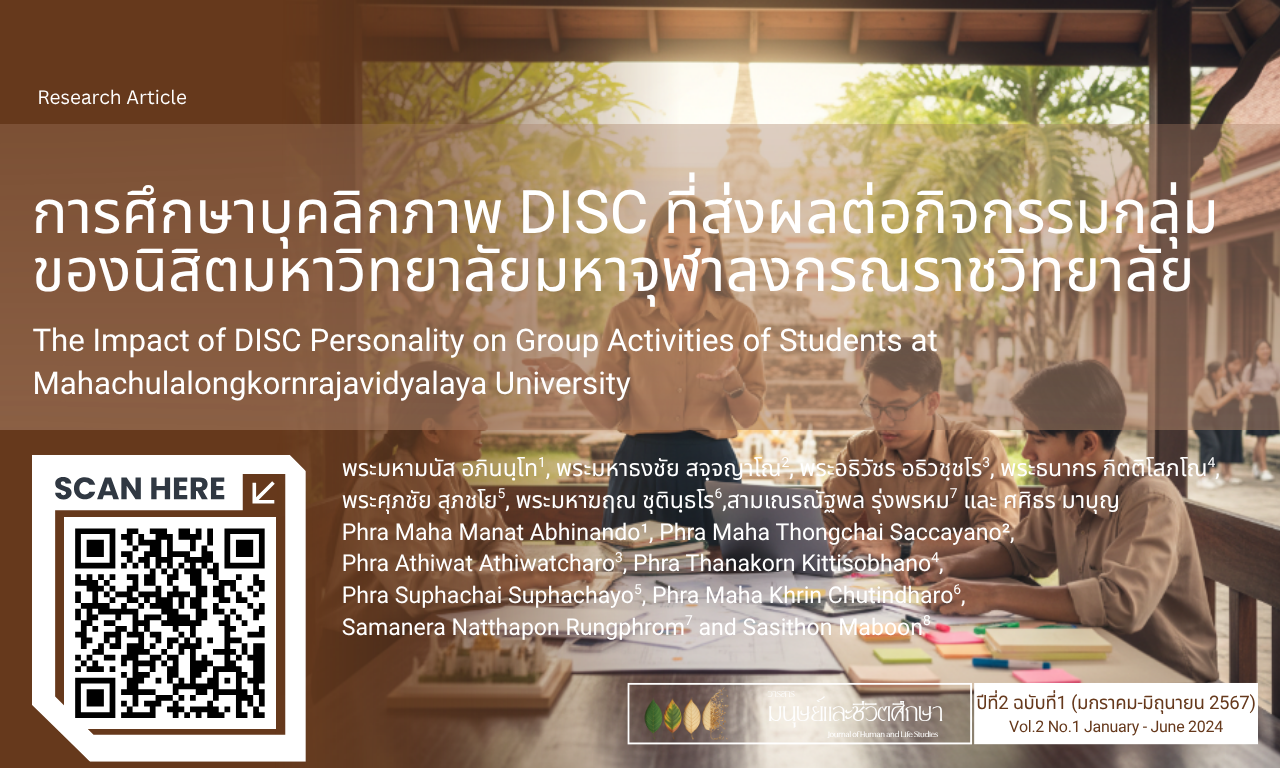
การศึกษาบุคลิกภาพ DISC ที่ส่งผลต่อกิจกรรมกลุ่ม ของนิสิตมหาวิทยาลัยมหาจุฬาลงกรณราชวิทยาลัย
The Impact of DISC Personality on Group Activities of Students at Mahachulalongkornrajavidyalaya University
คำสำคัญ:
บุคลิกภาพ DISC, กิจกรรมกลุ่ม, นิสิต, การทำงานเป็นทีม, พลวัตของกลุ่มบทคัดย่อ
การทดลองนี้มีวัตถุประสงค์ 1) เพื่อศึกษาความสัมพันธ์ระหว่างบุคลิกภาพตามทฤษฎี DISC กับพฤติกรรมการทำกิจกรรมกลุ่มของนิสิตมหาวิทยาลัยมหาจุฬาลงกรณราชวิทยาลัย 2) เพื่อวิเคราะห์ผลของบุคลิกภาพตามทฤษฎี DISC ต่อประสิทธิภาพและความพึงพอใจในการทำกิจกรรมกลุ่ม และ 3) เพื่อนำเสนอแนวทางในการส่งเสริมประสิทธิภาพในการทำกิจกรรมกลุ่มโดยคำนึงถึงบุคลิกภาพ DISC รูปแบบการวิจัยเป็นการวิจัยเชิงทดลอง (Experimental Design) ใช้แนวคิดทฤษฎีบุคลิกภาพ DISC ของ Marston เป็นกรอบการวิจัย พื้นที่วิจัย คือ มหาวิทยาลัยมหาจุฬาลงกรณราชวิทยาลัย อำเภอวังน้อย จังหวัดพระนครศรีอยุธยา กลุ่มตัวอย่างคือ นิสิตบรรพชิตและคฤหัสถ์ จำนวน 12 รูป/คน ใช้วิธีคัดเลือกแบบเจาะจง (Purposive Sampling) เครื่องมือที่ใช้ในการวิจัยมี 3 ชนิด คือ 1) แบบประเมินบุคลิกภาพ DISC 2) แบบสังเกตพฤติกรรมกลุ่ม และ 3) แบบประเมินตนเอง (Self-assessment) วิเคราะห์ข้อมูลโดยใช้สถิติพื้นฐาน ได้แก่ ค่าร้อยละ ค่าเฉลี่ย และส่วนเบี่ยงเบนมาตรฐาน
ผลการวิจัยพบว่า 1.บุคลิกภาพแต่ละแบบมีบทบาทที่แตกต่างกันในกิจกรรมกลุ่ม โดยกลุ่ม D (Dominance) มีความเป็นผู้นำและมุ่งเน้นผลลัพธ์ 2. กลุ่ม I (Influence) มีความสามารถในการสร้างแรงบันดาลใจ สื่อสารและกระตุ้นทีม ทำให้บรรลุเป้าหมายได้อย่างรวดเร็วที่สุด 3. กลุ่ม S (Steadiness) ให้ความสำคัญกับความสัมพันธ์และการสนับสนุนทีม ส่วนกลุ่ม C (Conscientiousness) วิเคราะห์ปัญหาและทำงานอย่างเป็นระบบ องค์ความรู้จากงานวิจัยนี้ให้ข้อมูลเชิงลึกเกี่ยวกับพลวัตของกลุ่มและสามารถนำไปประยุกต์ใช้ในการออกแบบกิจกรรมการเรียนรู้ที่คำนึงถึงความหลากหลายทางบุคลิกภาพ เพื่อปรับปรุงประสิทธิภาพของทีมและการทำงานร่วมกัน
เอกสารอ้างอิง
Alessandra, T., & O'Connor, M. J. (1996). The platinum rule: Discover the four basic business personalities and how they can lead you to success. Warner Books.
Bonnstetter, B. J., Suiter, J. I., & Widrick, R. J. (1993). Comparison of the DiSC Classic Profile and the Personal Profile System.
Clarke, R. V. (1971). The personality profiles of loan officers.
Everything DiSC®. (n.d.). Everything DiSC research archive. https://www.everythingdisc.com
Geier, J. G. (1967). A trait approach to the study of leadership in small groups. Journal of Communication, 17(4), 316–323.
Hennessy, E., & Geier, J. G. (1971). DiSC: A guide to effective communication. Performax Systems International.
Lapointe, L. B. (1989). Mid-level sales managers: Their personal styles and the styles of the salespeople they recruit.
Marston, W. M. (1928). Emotions of normal people. Harcourt, Brace and Company.
Merrill, D. W., & Reid, R. H. (1981). Personal styles and effective performance. Chilton Book Company.
Newton, R. D. (2005). DiSC: The universal language of behavior. Inscape Publishing.
Wiley, J. (1996). DiSC: Understanding yourself and others. Inscape Publishing.
จิรภิญญา. (2562). บุคลิกภาพที่ส่งผลต่อความต้องการคุณลักษณะงานของพนักงานในบริษัทเอกชนของกลุ่มเจเนเรชั่นวาย (สารนิพนธ์). วิทยาลัยการจัดการ มหาวิทยาลัยมหิดล.
ศิลปะการเข้าใจคนแต่ละประเภทตาม DISC model เพื่อความสำเร็จขององค์กร. (ม.ป.ป.). วารสารพิกุล คณะมนุษยศาสตร์และสังคมศาสตร์ มหาวิทยาลัยราชภัฏกำแพงเพชร.
สำรวจพฤติกรรมการทำงานกับคน 4 ประเภทไปกับ DISC model. (ม.ป.ป.). สืบค้นจาก https://www.hrex.asia
DISC for teamwork: รู้จักตัวเองและเข้าใจผู้อื่นเพื่อการทำงานเป็นทีม. (ม.ป.ป.). สืบค้นจาก https://www.hr-odthai.com
ดาวน์โหลด
เผยแพร่แล้ว
รูปแบบการอ้างอิง
ฉบับ
ประเภทบทความ
สัญญาอนุญาต
ลิขสิทธิ์ (c) 2024 วารสารมนุษย์และชีวิตศึกษา

อนุญาตภายใต้เงื่อนไข Creative Commons Attribution-NonCommercial-NoDerivatives 4.0 International License.
บทความที่ได้รับการตีพิมพ์เป็นลิขสิทธิ์ของวารสารมนุษย์และชีวิตศึกษา
ข้อความที่ปรากฏในบทความแต่ละเรื่องในวารสารวิชาการเล่มนี้เป็นความคิดเห็นส่วนตัวของผู้เขียนแต่ละท่านไม่เกี่ยวข้องกับวารสารชีวิตศึกษา และกองบรรณาธิการท่านอื่นๆ ในสำนักพิมพ์ฯ แต่อย่างใด ความรับผิดชอบองค์ประกอบทั้งหมดของบทความแต่ละเรื่องเป็นของผู้เขียนแต่ละท่าน หากมีความผิดพลาดใดๆ ผู้เขียนแต่ละท่านจะรับผิดชอบบทความของตนเองแต่ผู้เดียว