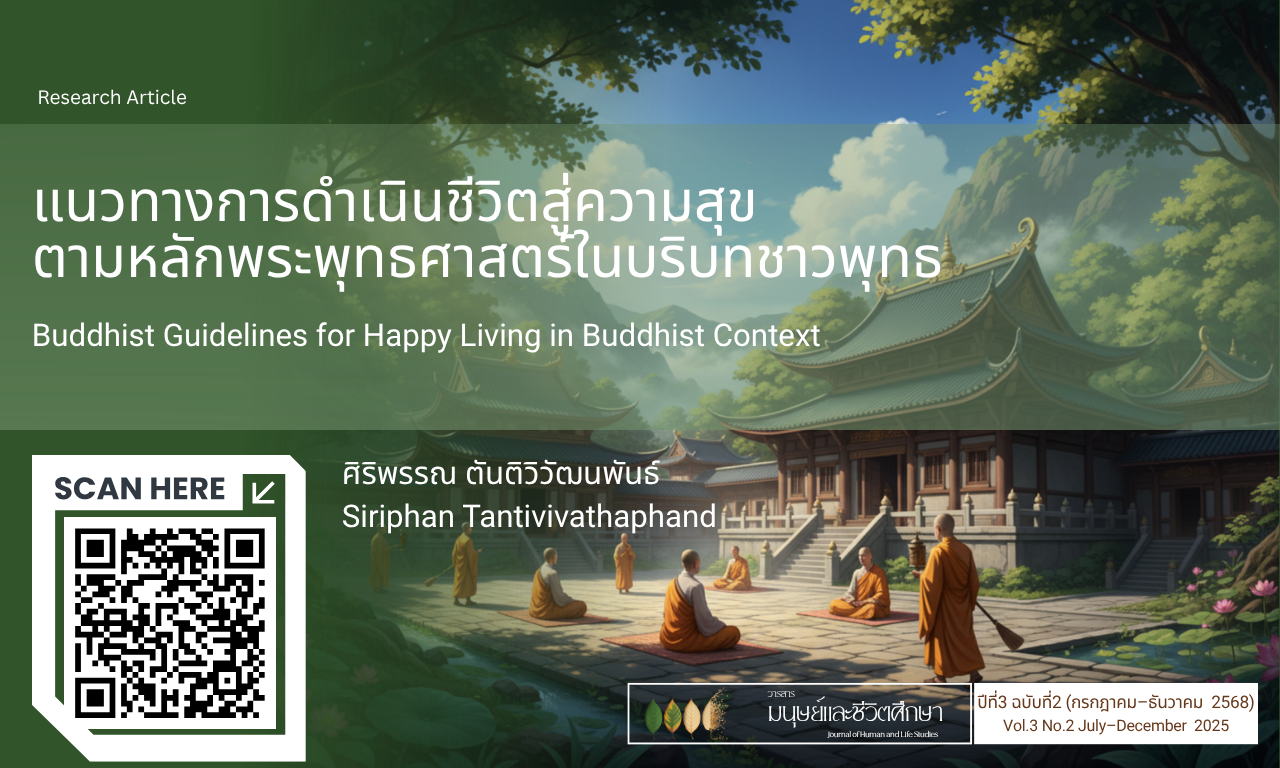
แนวทางการดำเนินชีวิตสู่ความสุขตามหลักพระพุทธศาสตร์ในบริบทชาวพุทธ
Buddhist Guidelines for Happy Living in Buddhist Context
คำสำคัญ:
แนวทางการดำเนินชีวิต, ความสุข, พระพุทธศาสนา, หลักธรรมบทคัดย่อ
บทความวิจัยเชิงเอกสารนี้มีวัตถุประสงค์ 1) เพื่อศึกษาหลักธรรมในพระพุทธศาสนาที่เกี่ยวข้องกับแนวทางการดำเนินชีวิตสู่ความสุข 2) เพื่อวิเคราะห์แนวทางการดำเนินชีวิตตามหลักพระพุทธศาสตร์ในบริบทของชาวพุทธ และ 3) เพื่อสังเคราะห์รูปแบบการดำเนินชีวิตที่นำไปสู่ความสุขที่แท้จริง โดยใช้การวิจัยเชิงเอกสาร (Documentary Research) อาศัยกรอบแนวคิดเรื่องความสุขในพระพุทธศาสนา ได้แก่ หลักกัลยาณมิตร มงคลสูตร ทิฏฐธัมมิกัตถประโยชน์ และหลักภาวนา 4 เป็นฐานในการวิเคราะห์ แหล่งข้อมูลประกอบด้วยพระไตรปิฎกฉบับมหาจุฬาลงกรณราชวิทยาลัย อรรถกถา คัมภีร์ และเอกสารวิชาการที่เกี่ยวข้อง วิเคราะห์ข้อมูลด้วยการวิเคราะห์เนื้อหาและการพรรณนาเชิงวิชาการ
ผลการวิจัยพบว่า 1) หลักธรรมที่เกี่ยวกับการดำเนินชีวิตสู่ความสุขในพระพุทธศาสนามีความครบถ้วน เป็นระบบ และมุ่งเน้นการพัฒนาชีวิตอย่างสมดุล โดยสามารถจัดกลุ่มได้เป็น 3 ด้าน ได้แก่ ความสัมพันธ์ทางสังคม การพัฒนาตนเอง และการสร้างความสุขในชีวิตประจำวัน ซึ่งล้วนตั้งอยู่บนฐานของสติ ปัญญา ศีลธรรม และเมตตา 2) แนวทางการดำเนินชีวิตสู่ความสุขประกอบด้วย 4 ประการสำคัญ ได้แก่ การคบหากัลยาณมิตร การเลือกสิ่งแวดล้อมอย่างมีปัญญา การตระหนักในหลักกรรมว่าตนเป็นผู้กำหนดชีวิต และการปฏิบัติธรรมเพื่อการอยู่ร่วมกันในสังคมอย่างสันติ แนวทางทั้ง 4 ประการนี้มีความสัมพันธ์เชื่อมโยงและเกื้อหนุนกันอย่างเป็นระบบ 3) รูปแบบการดำเนินชีวิตที่นำไปสู่ความสุขที่แท้จริงสามารถสังเคราะห์เป็นแบบแผน “ชีวิตงาม” ซึ่งประกอบด้วย 3 ระดับ ได้แก่ ระดับบุคคล ระดับสังคม และระดับจิตใจ โดยสอดคล้องกับหลักไตรสิกขา คือ ศีล สมาธิ และปัญญา อันเป็นกระบวนการพัฒนาชีวิตอย่างต่อเนื่ององค์ความรู้จากการวิจัยนี้สามารถนำไปประยุกต์ใช้เพื่อส่งเสริมคุณภาพชีวิตของชาวพุทธในชีวิตประจำวัน ตลอดจนเป็นแนวทางสำหรับสถาบันทางพระพุทธศาสนา เช่น วัด โรงเรียน และชุมชน ในการออกแบบกิจกรรมหรือโปรแกรมพัฒนาคุณภาพชีวิตที่สอดคล้องกับหลักธรรม เพื่อเสริมสร้างสังคมที่มีความสุขอย่างยั่งยืนในบริบทสังคมไทยปัจจุบัน
เอกสารอ้างอิง
Attarung, T., & Jampawal, T. (2024). The art of happy living in Buddhism. Journal of Mahapajapati Buddhist Review, 1(2), 26–35. https://so09.tci-thaijo.org/index.php/MPT_MBU/article/view/2082
Phra Dhammapitaka (P. A. Payutto). (2003). Dictionary of Buddhism: Compendium of dhamma (12th ed.). Mahachulalongkornrajavidyalaya University.
Phra Brahmagunabhorn (P. A. Payutto). (2016). Buddhadhamma: Expanded edition (47th ed.). Palitham Publishing.
Mahachulalongkornrajavidyalaya University. (1996). Tipiṭaka (Thai version, Mahachulalongkornrajavidyalaya University ed., Vols. 1–45). Mahachulalongkornrajavidyalaya University.
National Statistical Office. (2023). Report on social and cultural conditions survey 2023. National Statistical Office.
ดาวน์โหลด
เผยแพร่แล้ว
รูปแบบการอ้างอิง
ฉบับ
ประเภทบทความ
สัญญาอนุญาต
ลิขสิทธิ์ (c) 2025 วารสารมนุษย์และชีวิตศึกษา

อนุญาตภายใต้เงื่อนไข Creative Commons Attribution-NonCommercial-NoDerivatives 4.0 International License.
บทความที่ได้รับการตีพิมพ์เป็นลิขสิทธิ์ของวารสารมนุษย์และชีวิตศึกษา
ข้อความที่ปรากฏในบทความแต่ละเรื่องในวารสารวิชาการเล่มนี้เป็นความคิดเห็นส่วนตัวของผู้เขียนแต่ละท่านไม่เกี่ยวข้องกับวารสารชีวิตศึกษา และกองบรรณาธิการท่านอื่นๆ ในสำนักพิมพ์ฯ แต่อย่างใด ความรับผิดชอบองค์ประกอบทั้งหมดของบทความแต่ละเรื่องเป็นของผู้เขียนแต่ละท่าน หากมีความผิดพลาดใดๆ ผู้เขียนแต่ละท่านจะรับผิดชอบบทความของตนเองแต่ผู้เดียว