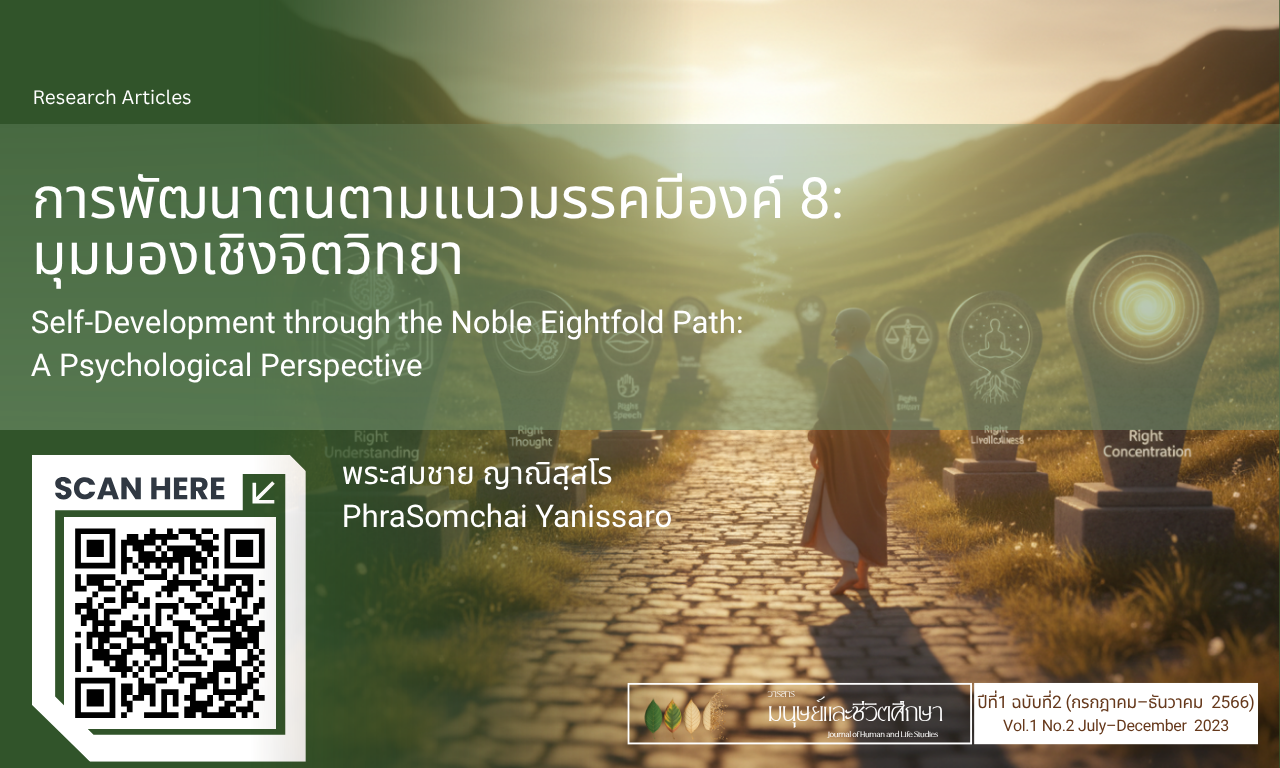
การพัฒนาตนตามแนวมรรคมีองค์ 8: มุมมองเชิงจิตวิทยา
Self-Development through the Noble Eightfold Path: A Psychological Perspective
บทคัดย่อ
บทความนี้มีวัตถุประสงค์ 1) เพื่อศึกษาหลักการของมรรคมีองค์ 8 ในฐานะกรอบการพัฒนาตนตามแนวพุทธศาสตร์ 2) เพื่อวิเคราะห์ความสอดคล้องระหว่างมรรคมีองค์ 8 กับแนวคิดทางจิตวิทยาสมัยใหม่ และ 3) เพื่อเสนอแนวทางการนำมรรคมีองค์ 8 ไปประยุกต์ใช้ในกระบวนการพัฒนาตนในบริบทสังคมไทยร่วมสมัย รูปแบบการวิจัยเป็นการวิจัยเชิงคุณภาพแบบวิจัยเอกสาร (Documentary Research) ใช้แนวคิดมรรคมีองค์ 8 ของพระพุทธเจ้าและแนวคิดการพัฒนาตน (Self-development) ตามแนวจิตวิทยาเชิงบวก (Positive Psychology) ของ Seligman เป็นกรอบการวิจัย เก็บรวบรวมข้อมูลจากพระไตรปิฎก คัมภีร์อรรถกถา งานวิจัยและบทความทางวิชาการที่เกี่ยวข้องทั้งภาษาไทยและภาษาอังกฤษ จำนวน 45 รายการ วิเคราะห์ข้อมูลโดยการวิเคราะห์เนื้อหา (Content Analysis) แล้วเขียนบรรยายเชิงพรรณนา
ผลการวิจัยพบว่า 1) มรรคมีองค์ 8 มีโครงสร้างที่ครอบคลุมการพัฒนามนุษย์ใน 3 มิติหลัก ได้แก่ มิติปัญญา (ศีล สมาธิ ปัญญา) มิติพฤติกรรม และมิติจิตใจ ซึ่งสอดคล้องกับโมเดลการพัฒนาตนแบบองค์รวม (Holistic Self-development) 2) มรรคมีองค์ 8 มีความสอดคล้องกับแนวคิดทางจิตวิทยาสมัยใหม่หลายประการ ได้แก่ สติ (Mindfulness) การควบคุมตนเอง (Self-regulation) สติปัญญาทางอารมณ์ (Emotional Intelligence) และการเติบโตหลังวิกฤต (Post-traumatic Growth) 3) แนวทางการประยุกต์มรรคมีองค์ 8 ในบริบทร่วมสมัยสามารถบูรณาการกับกระบวนการพัฒนาตนในองค์กร การศึกษา และการบำบัดทางจิตใจได้อย่างเป็นรูปธรรม องค์ความรู้จากงานวิจัยนี้เป็นประโยชน์ต่อการพัฒนากระบวนการพัฒนาตนที่บูรณาการมิติทางพุทธศาสตร์และจิตวิทยา สามารถนำไปใช้ในการออกแบบหลักสูตรพัฒนาบุคลากร การให้คำปรึกษา และการส่งเสริมสุขภาวะทางจิตใจในสังคมไทย
เอกสารอ้างอิง
Analayo. (2006). Satipatthana: The direct path to realization. Windhorse Publications.
Bandura, A. (1977). Social learning theory. Prentice Hall.
Bandura, A. (1997). Self-efficacy: The exercise of control. W. H. Freeman.
Baer, R. A. (2003). Mindfulness training as a clinical intervention: A conceptual and empirical review. Clinical Psychology: Science and Practice, 10(2), 125–143.
Beck, A. T. (1979). Cognitive therapy of depression. Guilford Press.
Deci, E. L., & Ryan, R. M. (2000). The “what” and “why” of goal pursuits: Human needs and the self-determination of behavior. Psychological Inquiry, 11(4), 227–268.
Kabat-Zinn, J. (1990). Full catastrophe living: Using the wisdom of your body and mind to face stress, pain, and illness. Delacorte.
Kabat-Zinn, J. (2003). Mindfulness-based interventions in context: Past, present, and future. Clinical Psychology: Science and Practice, 10(2), 144–156.
Krippendorff, K. (2004). Content analysis: An introduction to its methodology (2nd ed.). Sage.
Rogers, C. R. (1961). On becoming a person: A therapist’s view of psychotherapy. Houghton Mifflin.
Seligman, M. E. P. (2002). Authentic happiness. Free Press.
Shapiro, S. L., Carlson, L. E., Astin, J. A., & Freedman, B. (2006). Mechanisms of mindfulness. Journal of Clinical Psychology, 62(3), 373–386.
Sue, D. W., & Sue, D. (2013). Counseling the culturally diverse: Theory and practice (6th ed.). Wiley.
Thanissaro Bhikkhu. (2010). Right mindfulness: Memory & ardency on the Buddhist path. Metta Forest Monastery.
Wilber, K. (2000). Integral psychology: Consciousness, spirit, psychology, therapy. Shambhala.
Zenner, C., Herrnleben-Kurz, S., & Walach, H. (2014). Mindfulness-based interventions in schools: A systematic review and meta-analysis. Frontiers in Psychology, 5, 603.
Zimmerman, B. J. (2000). Attaining self-regulation: A social cognitive perspective. In M. Boekaerts, P. R. Pintrich, & M. Zeidner (Eds.), Handbook of self-regulation (pp. 13–39). Academic Press.
กรมสุขภาพจิต. (2566). รายงานสุขภาพจิตคนไทย ประจำปีงบประมาณ 2566. กระทรวงสาธารณสุข.
พระพรหมคุณาภรณ์ (ป.อ.ปยุตฺโต). (2549). พจนานุกรมพุทธศาสตร์ ฉบับประมวลธรรม (พิมพ์ครั้งที่ 16). มหาจุฬาลงกรณราชวิทยาลัย.
ดาวน์โหลด
เผยแพร่แล้ว
รูปแบบการอ้างอิง
ฉบับ
ประเภทบทความ
สัญญาอนุญาต
ลิขสิทธิ์ (c) 2023 วารสารมนุษย์และชีวิตศึกษา

อนุญาตภายใต้เงื่อนไข Creative Commons Attribution-NonCommercial-NoDerivatives 4.0 International License.
บทความที่ได้รับการตีพิมพ์เป็นลิขสิทธิ์ของวารสารมนุษย์และชีวิตศึกษา
ข้อความที่ปรากฏในบทความแต่ละเรื่องในวารสารวิชาการเล่มนี้เป็นความคิดเห็นส่วนตัวของผู้เขียนแต่ละท่านไม่เกี่ยวข้องกับวารสารชีวิตศึกษา และกองบรรณาธิการท่านอื่นๆ ในสำนักพิมพ์ฯ แต่อย่างใด ความรับผิดชอบองค์ประกอบทั้งหมดของบทความแต่ละเรื่องเป็นของผู้เขียนแต่ละท่าน หากมีความผิดพลาดใดๆ ผู้เขียนแต่ละท่านจะรับผิดชอบบทความของตนเองแต่ผู้เดียว