
บทเรียนการใช้ Soft Power ของจีนสู่การใช้ Soft Power เพื่อสนับสนุนยุทธศาสตร์ชาติ ๒๐ ปี
Article Sidebar
Main Article Content
Abstract
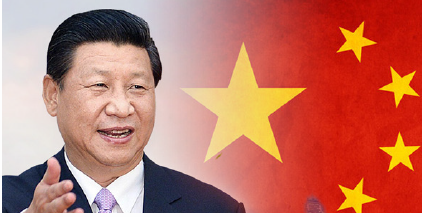
China’s rapid economic growth over the past four decades, following the implementation of Deng Xiaoping’s social and economic reform and opening-up policy in 1978, together with President Xi Jinping’s statement in 2014 that “we should increase China’s soft power to better communicate China’s messages to the world,” underscores China’s continued commitment to national development and the expansion of its influence through the use of soft power. This serves as clear evidence of the growing importance of soft power in China’s strategic approach.
Nevertheless, the use of soft power is not a new phenomenon; it has existed since ancient times and is not limited to great powers alone. Many other states have also employed soft power as a means of pursuing their policy objectives. Accordingly, this article examines China’s use of soft power to achieve strategic goals encompassing both economic development and international political objectives. The lessons derived from this analysis are then synthesized into policy-oriented conceptual recommendations for employing soft power to support national development within the framework of the 20-Year National Strategy.
Downloads
Article Details

This work is licensed under a Creative Commons Attribution-NonCommercial-NoDerivatives 4.0 International License.
Articles in this journal are copyrighted by the Naval Strategic Studies Center, Naval Education Department, and published under the Creative Commons Attribution-NonCommercial-NoDerivatives 4.0 International (CC BY-NC-ND 4.0) license.
may be read and used for academic purposes, such as teaching, research, or citation, with proper credit given to the author and the journal.
Use or modification of the articles is prohibited without permission.
Statements expressed in the articles are solely the opinions of the authors.
Authors are fully responsible for the content and accuracy of their articles.
Any other republication of the articles requires permission from the journal.
References
Praornpit Katchwattana , สุนทรพจน์ สี จิ้นผิง ครบรอบ 40 ปี นโยบายปฏิรูป & เปิดประเทศ “จีนไม่ต้องการเป็นเจ้าโลก” แต่ขอเดินหน้าสร้างตำนานความสำเร็จ พลิกฟ้าพลิกแผ่นดินให้โลกจำ, December 20, 2018 , https://www.salika.co/2018/12/20/xijinping-speech-40-years-china-revolution/
คมปทิต สกุลหวง, “สีจิ้นผิงกับอำนาจละมุน” และทิศทางนโยบายปี 2018 ที่โลกห้ามกะพริบตา, https://thestandard.co/2018-year-of-xi-jinping-china-soft-power/
กันตลักษณ์, “พลังอำนาจ”, นาวิกาธิปัตย์สาร, ฉบับที่ ๘๓ ,หน้า ๖๔.
Ibid., หน้า ๖๙
กันตลักษณ์, “Soft Power ตามแนวความคิดของ Joseph Nye”, นาวิกาธิปัตย์สาร, ฉบับที่ ๘๔ หน้า ๓๘ -๓๙
Ibid., หน้า ๓๙ – ๔๒.
Ibid., หน้า ๔๓ – ๔๗.
http://www.thaizhong.org/th/content/interesting/maritime-silk-road-21.html
On geography, see, e.g., Robert Kaplan, “The Geography of Chinese Power: How Far Can Beijing Reach on Land and at Sea?,” Foreign Affairs (May/June 2010): 22–41. On China as a “civilization state,” see especially Joseph Levenson, Confucian China and its Modern Fate: A Trilogy, vol. 1, The Problem of Intellectual Continuity (Berkeley: University of California Press, 1968), p. 95–108.
Henry Kissinger, On China (New York: Penguin, 2011), p. 1–32; and Zhu Liqun, China’s Foreign Policy Debates, Chaillot Papers (Paris: European Union Institute for International Security Studies, 2010), p. 17–20.
Stephen Walt, The Origins of Alliances (Ithaca, NY: Cornell University Press, 1987), p. 17–33; Randall Schweller, “Bandwagoning for Profit: Bringing the Revisionist State Back In,” International Security 19, no. 1 (1994): 72–107; and Paul Schroeder, “Historical Reality Versus Neo-Realist Theory,” International Security 19, no. 1 (1994): p. 108–48.
Wang Jisi, “China in the Middle,” American Interest 10, no. 4 (2015): 55–56, http://www.the-american-interest.com/2015/02/02/china-in-the-middle/; and Goldstein, Rising to the Challenge, 20–21.
“Joint Communiqué of the United States of America and the People’s Republic of China (Shanghai Communiqué),” February 28, 1972, http://www.china.org.cn/english/china-us/26012.htm.
Wang Jisi, “Duō jí huà duì zhàn bà quán zhŭ yì: Zhōng guó de guó jì zhèng zhì guān” [Multipolarity versus hegemonism: Chinese views of international politics], September 28, 2008, http://www.cssm.org.cn/view.php?id=21083; Goldstein, Rising to the Challenge, 22–40; and Brantly Womack, “Asymmetry Theory and China’s Concept of Multipolarity,” Journal of Contemporary China 12, no. 39 (2004): p.351–59.
Randall Schweller and Xiaoyu Pu, “After Unipolarity: China’s Visions of International Order in an Era of U.S. Decline,” International Security 36, no. 1 (2011): p.58–64.
Flynt Leverett and Wu Bingbing, “The New Silk Road and China’s Evolving Grand Strategy”’, Nov 14, 2016, https://www.journals.uchicago.edu/doi/10.1086/689684
Ibid.
Zhong Feiteng, “ China’s grand strategy in a new era”, http://www.eastasiaforum.org/2018/03/05/chinas-grand-strategy-in-a-new-era/
Esther Pan ,“China’s Soft Power Initiative”, https://www.cfr.org/backgrounder/chinas-soft-power-initiative
Eleanor Albert, “China’s Big Bet on Soft Power”, https://www.cfr.org/backgrounder/chinas-big-bet-soft-power
Ibid.
Flynt Leverett and Wu Bingbing, loc.cit.
“การใช้ Soft Power ของจีน”, จุลสารความมั่นคงศึกษา, ฉบับที่ ๑๓๖ – ๑๓๗ (กุมภาพันธ์ ๒๕๕๗), หน้า ๔๙
Esther Pan, loc.cit.
Eleanor Albert, loc.cit.
สำนักวิชาการ สำนักงานเลขาธิการผู้แทนราษฏร, “จีนกับการเป็นมหาอำนาจในศตวรรษที่ ๒๑”, เมษายน ๒๕๖๐, หน้า ๑๔
Ibid., หน้า ๑๕
Ibid., หน้า ๑๒ – ๑๓
Eleanor Albert, loc.cit.
Ibid.
Ibid.
จุลสารความมั่นคงศึกษา, op.cit., หน้า ๕๓ – ๕๔
Eleanor Albert, loc.cit.
จุลสารความมั่นคงศึกษา, op.cit., หน้า ๕๖ – ๕๗
Eleanor Albert, loc.cit.
