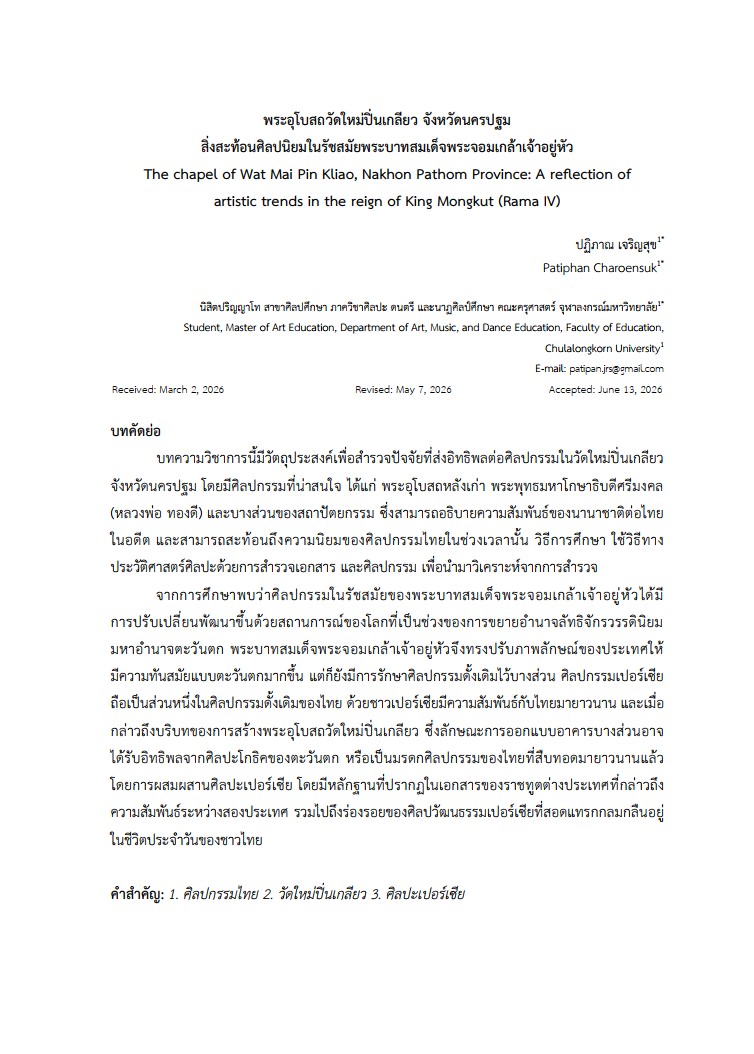
พระอุโบสถวัดใหม่ปิ่นเกลียว จังหวัดนครปฐม สิ่งสะท้อนศิลปนิยมในรัชสมัยพระบาทสมเด็จพระจอมเกล้าเจ้าอยู่หัว
คำสำคัญ:
ศิลปกรรมไทย, วัดใหม่ปิ่นเกลียว, . ศิลปะเปอร์เซียบทคัดย่อ
This article aim to investigate the factors influencing the artistic works at Wat Mai Pin Kliao, Nakhon Pathom Province. The Key artistic highlights includ the ancient ordination hall (Ubosot), the Buddha image Phra Phuttha Maha Kosathibodi Sri Mongkol (Luang Pho Thongdee), and specific architectural elements. These features not only elucidate Thailand’s historical international relations but also reflect the unique artistic preferences of Thai society during that era. The research methodology employ an art-historical approach, integrating documentary analysis with field surveys.
The study reveal that during the reign of King Mongkut (Rama IV), Thai art underwent significant transformation in response to the global expansion of Western imperialism. Consequently, the King modernized the national image by adopting Western styles while selectively preserving traditional artistic heritage. Persian art, in particular, has long been a constituent of Thai tradition due to the enduring ties between the two nations.
Regarding the architectural context of the Ubosot at Wat Mai Pin Kliao, certain design features may have been influenced by Western Gothic art or represent a long-standing Thai artistic legacy integrated with Persian influences. This is clearly evidenced in the records of foreign envoys documenting the relations between the two countries, as well as the subtle integration of Persian cultural traces within the daily life of the Thai people.
เผยแพร่แล้ว
รูปแบบการอ้างอิง
ฉบับ
ประเภทบทความ
สัญญาอนุญาต

อนุญาตภายใต้เงื่อนไข Creative Commons Attribution-NonCommercial-NoDerivatives 4.0 International License.
##default.contextSettings.thaijo.licenseTerms##


