The Development of Learning Activities Using 5E Inquiry–based to Enhance Analytical Thinking on ASEAN Studies for Phathomsuksa 6
Article Sidebar
Main Article Content
Abstract
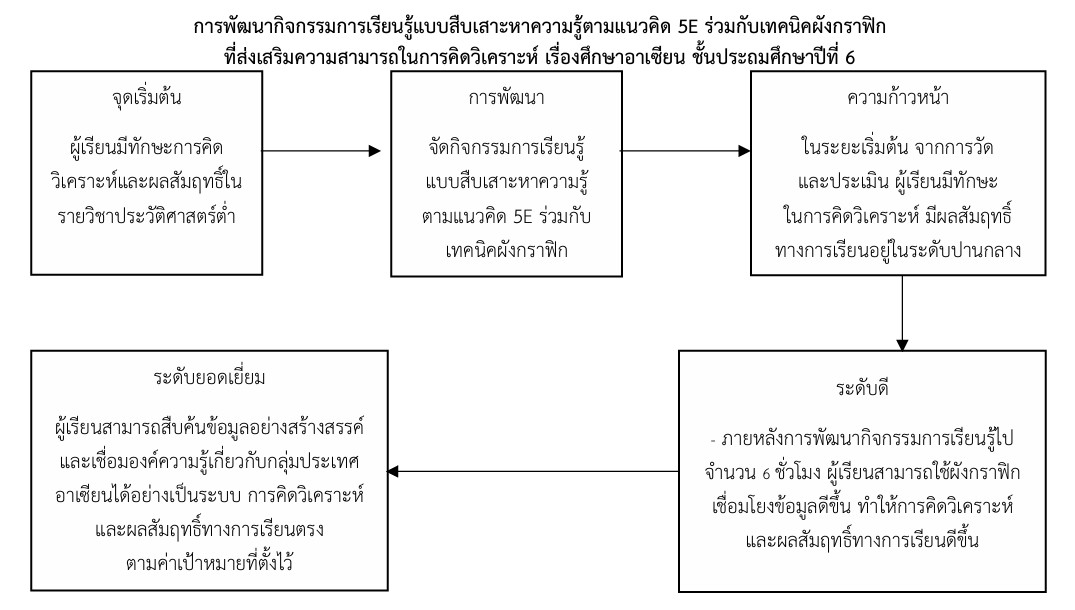
The purposes of this research were: (1) to develop inquiry-based learning activities based on the 5E instructional model integrated with graphic organizers to enhance the analytical thinking skills of Prathomsuksa 6 students in the topic of ASEAN Studies, with an efficiency criterion of 80/80; (2) to compare students’ analytical thinking skills before and after learning through the 5E inquiry-based learning activities integrated with graphic organizers; (3) to compare students’ learning achievement before and after learning through the 5E inquiry-based learning activities integrated with graphic organizers; and (4) to investigate students’ satisfaction with the learning activities. The sample consisted of 33 Grade 6 students from Sukhon Suksa School during the first semester of the 2024 academic year and was selected using cluster sampling. The research instruments included ten lesson plans based on the 5E inquiry-based learning model integrated with graphic organizers, a learning achievement test, an analytical thinking skills test, and a student satisfaction questionnaire. The data were analyzed using the mean, standard deviation, and dependent samples t-test. The research findings revealed that: (1) the efficiency of the inquiry-based learning activities based on the 5E instructional model integrated with graphic organizers was 81.52/82.12; (2) students’ analytical thinking skills after learning were significantly higher than those before learning at the .05 level; (3) students’ learning achievement after learning was significantly higher than that before learning at the .05 level; and (4) students’ overall satisfaction with the learning activities was at the highest level.
Article Details

This work is licensed under a Creative Commons Attribution-NonCommercial-NoDerivatives 4.0 International License.
References
กระทรวงศึกษาธิการ. (2560). หลักสูตรแกนกลางการศึกษาขั้นพื้นฐาน พุทธศักราช 2551. กรุงเทพฯ: โรงพิมพ์ชุมนุมสหกรณ์การเกษตรแห่งประเทศไทย.
จุฑามาส ทัศนา, สิราวรรณ จรัสรวีวัฒน์ และ ปานเพชร ร่มไทร. (2565). ผลการจัดการเรียนรู้แบบร่วมมือเทคนิคการเรียนร่วมกัน ร่วมกับผังกราฟิก วิชาสังคมศึกษา ของนักเรียนชั้นมัธยมศึกษาปีที่ 3. วารสารสังคมศาสตร์ปัญญาพัฒน์, 4(4), 211–224.
ญาดา มาบุญลือ. (2567). การพัฒนากิจกรรมการเรียนรู้ตามกระบวนการสืบเสาะหาความรู้แบบ 5E ร่วมกับกระบวนการออกแบบเชิงวิศวกรรมตามแนวคิดสะตีมศึกษา เพื่อส่งเสริมสมรรถนะการประเมินและออกแบบกระบวนการสืบเสาะหาความรู้ทางวิทยาศาสตร์ เรื่อง กระบวนการเปลี่ยนแปลงทางลมฟ้าอากาศ สำหรับนักเรียนระดับมัธยมศึกษาปีที่ 1. (การศึกษามหาบัณฑิต, มหาวิทยาลัยนเรศวร).
ติณณ์ภัทร เพชรศิริวรรณ. (2563). การพัฒนากิจกรรมการเรียนรู้แบบ 5E เรื่อง ภูมิศาสตร์ทวีปยุโรปรายวิชาสังคมศึกษา ศาสนา และวัฒนธรรม สำหรับนักเรียน ชั้นมัธยมศึกษาปีที่ 2. (ครุศาสตรมหาบัณฑิต, มหาวิทยาลัยราชภัฏสกลนคร).
ทิศนา แขมมณี. (2562). ศาสตร์การสอน (ฉบับปรับปรุง). กรุงเทพฯ: สำนักพิมพ์แห่งจุฬาลงกรณ์มหาวิทยาลัย.
ปฏิภาณ สร้างคำ และ ธัชชัย จิตรนันท์. (2562). การพัฒนาผลสัมฤทธิ์ทางการเรียน เรื่อง พัฒนาการทางประวัติศาสตร์ไทยสมัยประชาธิปไตย ชั้นมัธยมศึกษาปีที่ 3 โดยการจัดการเรียนรู้แบบสืบเสาะหาความรู้ 5 ขั้น (5E). วารสารการบริหารและนิเทศการศึกษา, 10(2), 42–51.
ยศธร สีกลาง และ ปาริชาต ประเสริฐสังข์. (2569). ผลของกิจกรรมการเรียนรู้แบบสืบเสาะตามกระบวนการ 5E ร่วมกับเทคนิคผังกราฟิกที่มีต่อผลสัมฤทธิ์ทางการเรียนและความคิดสร้างสรรค์ ในหน่วยการเรียนรู้เรื่องร่างกายมนุษย์ของนักเรียนชั้นมัธยมศึกษาปีที่ 2. วารสารวิชาการมหาวิทยาลัยราชภัฏอุดรธานี, 14(1), 84–94.
โรงเรียนสุคนธ์ศึกษา. (2567). รายงานการประเมินตนเองของสถานศึกษา (SAR) ปีการศึกษา 2566. ร้อยเอ็ด: โรงเรียนสุคนธ์ศึกษา.
วรารัตน์ สีปัดถา และ ญาณภัทร สีหะมงคล. (2563). การเปรียบเทียบความสามารถในการคิดวิเคราะห์และผลสัมฤทธิ์ทางการเรียนระหว่างใช้กิจกรรมการเรียนรู้ปัญหาเป็นฐานร่วมกับผังกราฟิกกับการจัดกิจกรรมการเรียนรู้แบบปกติ รายวิชาสังคมศึกษาศาสนาและวัฒนธรรม นักเรียนชั้นมัธยมศึกษาปีที่ 2. วารสารเทคโนโลยีและสื่อสารการศึกษา คณะศึกษาศาสตร์ มหาวิทยาลัยมหาสารคาม, 3(9), 106-116.
วาสนา วงษาเนาว์, สุวิสาข์ จรัสกมลพงศ์ และ พิจิตรา ธงพานิช. (2566). นวัตกรรมการเรียนรู้แบบสืบเสาะหาความรู้เพื่อศึกษาการคิดเชิงระบบเรื่องโครงสร้างของพืชสำหรับนักเรียนชั้นประถมศึกษาปีที่ 4. วารสารการบริหารและนิเทศการศึกษา, 14(2), 77–90.
สมศักดิ์ ดลประสิทธิ์. (2564). แนวทางการจัดการศึกษาเพื่อพัฒนากำลังคนในศตวรรษที่ 21. วารสารคุรุสภาวิทยาจารย์, 2(1), 1-15.
Ausubel, D. P., Novak, J. D., & Hanesian, H. (1968). Educational Psychology: A Cognitive View (Vol. 6). New York: Holt, Rinehart and Winston.
Duran, M. & Dokme, I. (2016). The effect of the inquiry-based learning approach on student’s critical-thinking skills. Eurasia Journal of Mathematics, Science & Technology Education, 12(12), 2887-2908.
Keller, J. M. (1987). Development and Use of the ARCS Model of Instructional Design. Journal of Instructional Development, 10, 2-10.
Namonsai, N., Intanin, A., & Sanpundorn, S. (2023). The development of learning management activities using the inquiry-based learning (5E) to develop analytical thinking skills in the course science and technology for students in grade 3. EDUCATIO: Journal of Education, 8(1), 56-65.
Nwose, L. N., Nkama, N. A., & Nwose, M. O. (2023). Effect of graphic organizer as a teaching strategy on the achievement of senior secondary school students in social studies for global citizenship education. Ebonyi State College of Education, IKWO Journal of Educational Research, 8(1), 9-16.
Vygotsky, L. S. (1978). Mind in society: The development of higher psychological processes. Cambridge MA: Harvard University Press.
