Guidelines for Developing Agile Leadership to Achieve High-Performance Organizations Based on the Public Sector Management Quality Award Criteria in Educational Institutions under the Chonburi Provincial Administrative Organization
Article Sidebar
Main Article Content
Abstract
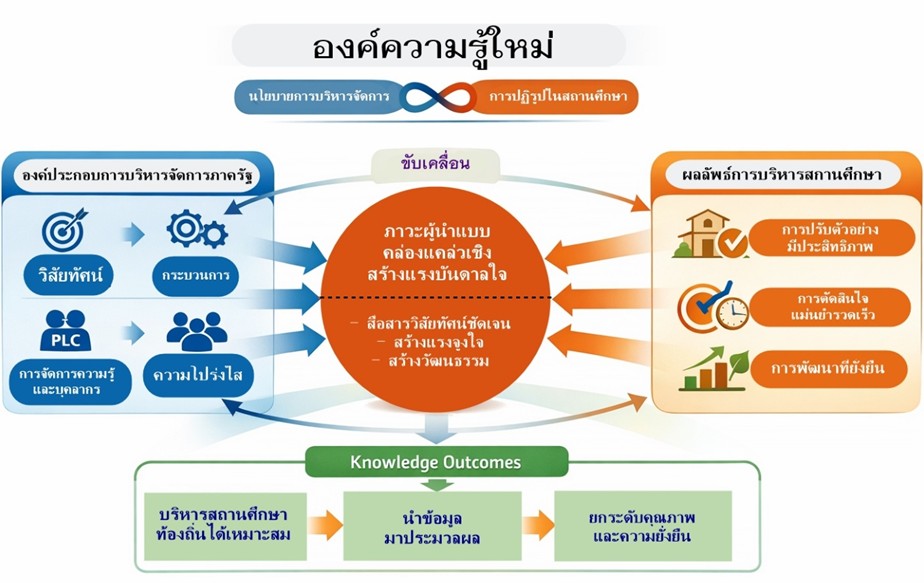
This research article aimed to: (1) examine agile leadership for achieving high-performance organizations in accordance with the Public Sector Management Quality Award (PMQA) criteria in educational institutions; (2) investigate the priority needs for agile leadership to achieve high-performance organizations based on the PMQA criteria in educational institutions under the Chonburi Provincial Administrative Organization; and (3) propose guidelines for developing agile leadership to achieve high-performance organizations in line with the PMQA criteria in educational institutions. The sample consisted of 267 participants, including school administrators and teachers from the Chonburi Provincial Administrative Organization. The research instrument was a questionnaire. Data were analyzed using frequency, percentage, mean, standard deviation, the Priority Needs Index (PNI), and content analysis. The findings revealed that: (1) overall agile leadership for achieving high-performance organizations based on the PMQA criteria in educational institutions under the Chonburi Provincial Administrative Organization was at a moderate level; (2) the assessment of priority needs for agile leadership indicated strengths in the ability to adapt rapidly to changing situations, while weaknesses were identified in the lack of decisiveness under uncertain conditions; and (3) the guidelines for developing agile leadership to achieve high-performance organizations emphasized that administrators should demonstrate results-oriented leadership, prioritizing organizational performance outcomes alongside continuous personnel development in terms of competencies, skills, and work attitudes. Such development aims to enhance performance capacity in alignment with institutional goals while also emphasizing engagement with all stakeholders to build confidence in school management.
Article Details

This work is licensed under a Creative Commons Attribution-NonCommercial-NoDerivatives 4.0 International License.
References
กฤตภาส บุญโยธา และ ดาวรุวรรณ ถวิลการ. (2566). ข้อเสนอเชิงกลยุทธ์ในการพัฒนาภาวะผู้นำแบบคล่องแคล่วในโรงเรียน สังกัดสำนักงานเขตพื้นที่การศึกษาประถมศึกษาชัยภูมิ เขต 2. วารสารวิจัย มข. (ฉบับบัณฑิตศึกษา) สาขามนุษยศาสตร์และสังคมศาสตร์, 11(3), 110–120.
ฐากร สิทธิโชค และ อัศว์ศิริ ลาปีอี. (2568). การมีส่วนร่วมในการจัดการศึกษาของภาคประชาสังคมและผู้มีส่วนได้ส่วนเสีย ตามร่างพระราชบัญญัติการศึกษาแห่งชาติ พ.ศ. . กรณีจังหวัดสงขลา และจังหวัดพัทลุง. วารสารการวิจัยกาสะลองคำ มหาวิทยาลัยราชภัฏเชียงราย, 19(1), 23–39.
ดวงดาว มงคลสวัสดิ์, สุมาลี ศรีพุทธรินทร์ และ จารุวรรณ เขียวน้ำชุม. (2568). ภาวะผู้นำเชิงกลยุทธ์ของผู้บริหารสถานศึกษาที่ส่งผลต่อการบริหารงาน วิชาการในสถานศึกษา สังกัดสำนักงานเขตพื้นที่การศึกษามัธยมศึกษามุกดาหาร. วารสารนวัตกรรมการศึกษาและการวิจัย, 9(1), 438–460.
นิลาวัลย์ จันทร์ต้น. (2568). ภาวะผู้นำเชิงกลยุทธ์ที่ส่งผลต่อประสิทธิผลของสถานศึกษาในยุคดิจิทัลสังกัดสำนักงานเขตพื้นที่การศึกษาประถมศึกษากำแพงเพชร เขต 1. (ครุศาสตรมหาบัณฑิต, มหาวิทยาลัยราชภัฏกำแพงเพชร).
บุญชม ศรีสะอาด. (2560). การวิจัยเบื้องต้น. (พิมพ์ครั้งที่ 10). กรุงเทพฯ: สุวีริยาสาส์น.
ปวีณา พลพาลสังข์ และ ธดา สิทธิ์ธาดา. (2567). การจัดการความรู้ของผู้บริหารสถานศึกษาที่ส่งผลต่อการบริหารงานบุคคลในสถานศึกษาสังกัดกรุงเทพมหานคร กลุ่มกรุงเทพใต้. วารสารเสียงธรรมจากมหายาน, 10(3), 1-9.
เพียงใจ อินหงสา. (2568). แนวทางการพัฒนาองค์กรสมรรถนะสูงของสถานศึกษา สังกัดสำนักงานเขตพื้นที่การศึกษามัธยมศึกษาบึงกาฬ. (ศึกษาศาสตรมหาบัณฑิต, มหาวิทยาลัยขอนแก่น).
วิชัย จันทร์จำรูญ, สุกิจ โพธิ์ศิริกุล, วรฉาย ทองคำ, วิราภรณ์ ส่งแสง และ บุญจักรวาล รอดบำเรอ. (2565). กระบวนการจัดการความรู้แหล่งเรียนรู้ในสถานศึกษา: การวิจัยเชิงปฏิบัติการแบบมีส่วนร่วม. วารสารรัชต์ภาคย์, 16(45), 536–548.
ศกุนตลา พร้อมมูล, ศกุนตลา พร้อมมูล, บรรจบ บุญจันทร์ และ อริสา นพคุณ. (2567). การพัฒนาสมรรถนะครูไทยยุคปกติใหม่ตามแนวคิดการพัฒนาอย่างยั่งยืน. วารสารสมาคมพัฒนาวิชาชีพการบริหารการศึกษาแห่งประเทศไทย, 6(2), 451–466.
สำนักงานคณะกรรมการพัฒนาระบบราชการ. (2558). เกณฑ์คุณภาพการบริหารจัดการภาครัฐ (PMQA). สืบค้นจาก https://www.opdc.go.th.
สุวิมล ว่องวาณิช. (2558). การวิจัยประเมินความต้องการจำเป็น. (พิมพ์ครั้งที่ 3). กรุงเทพฯ: จุฬาลงกรณ์มหาวิทยาลัย.
อภิวัฒน์ มรรคผล และ อุไร สุทธิแย้ม. (2566). ภาวะผู้นำแบบ Agile ของผู้บริหารสถานศึกษา สังกัดสำนักงานเขตพื้นที่การศึกษามัธยมศึกษากรุงเทพมหานคร เขต 2. วารสารบัณฑิตศึกษา : มหาวิทยาลัยราชภัฏสวนสุนันทา, 16(1), 64-87.
อาจบดินทร์ ผ่องพันธุ์งาม และ วานิช ประเสริฐพร. (2568). การใช้เทคโนโลยีสารสนเทศเพื่อการบริหารในยุคดิจิทัลของสถานศึกษา สังกัดสำนักงานเขตพื้นที่การศึกษาประถมศึกษาชัยภูมิ เขต 2. สิกขา วารสารศึกษาศาสตร์, 12(2), 187–197.
Cronbach, L. J. (1951). Coefficient alpha and the internal structure of tests. Psychometrika, 16(3), 297–334.
Krejcie, R. V., & Morgan, D. W. (1970). Determining sample size for research activities. Educational and Psychological Measurement, 30(3), 607–610.
Rovinelli, R. J., & Hambleton, R. K. (1977). On the use of content specialists in the assessment of criterion-referenced test item validity. Dutch Journal of Educational Research, 2, 49–60.
