Integrating the First Royal Working Principle, “Systematic Study of Information”, and the Inner Development Goals as a Framework for Curriculum Development to Enhance Life Skills, Thinking, and Relationships (Non-Technical Skills)
Keywords:
Non-Technical Skills, Life Skills, Thinking, Relationships, Royal Working PrincipleAbstract
This research aims to (1) analyze the conceptual application of the First Royal Working Principle, “Systematic Study of Information,” in curriculum development based on the Inner Development Goals (IDGs) framework, and (2) synthesize design and development approaches for curricula that promote life skills, critical thinking, and relationships as non-technical skills. This study employs a qualitative research approach, utilizing interpretive methodology and documentary analysis in conjunction with conceptual dialectics.
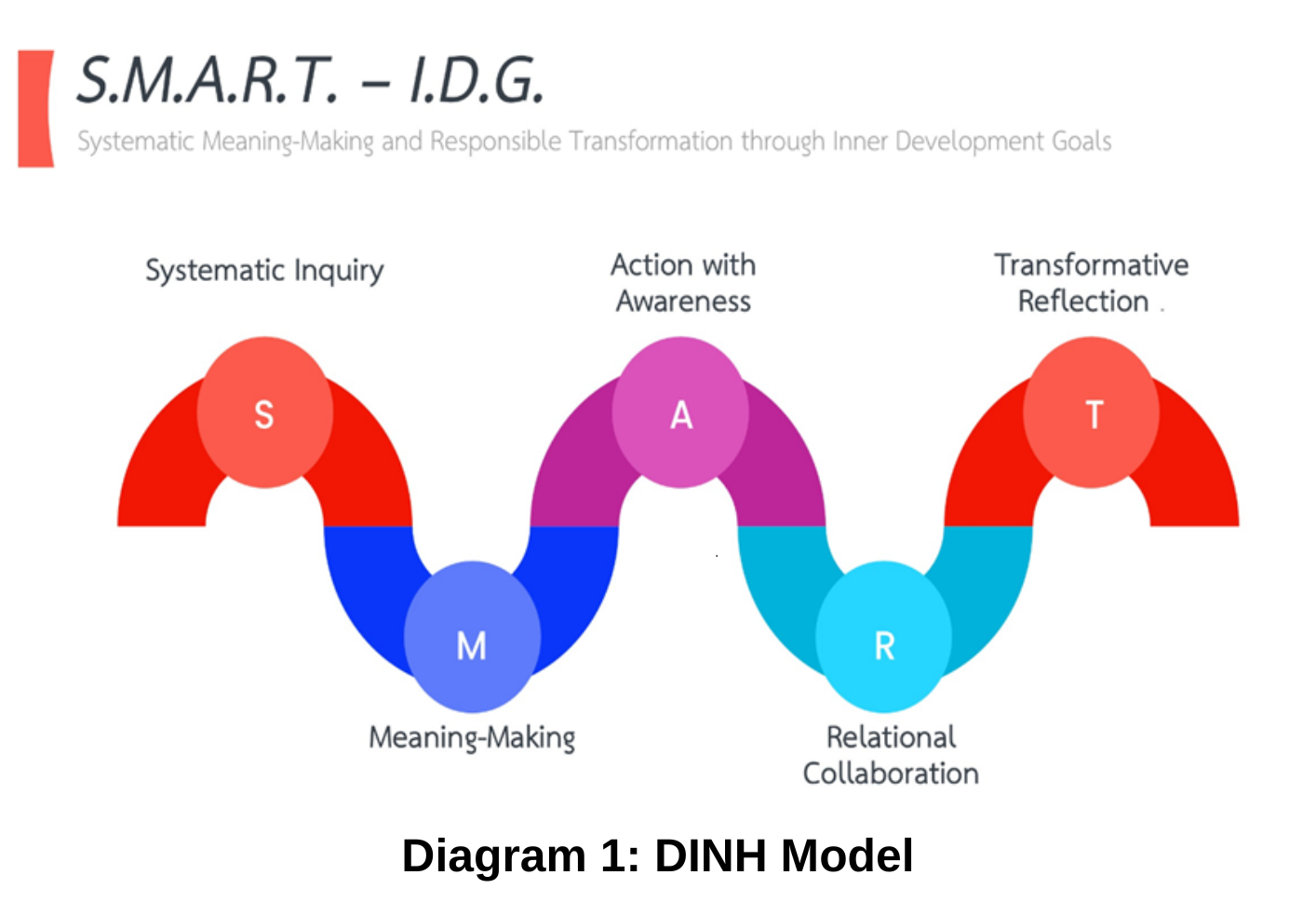
The findings indicate that the First Royal Working Principle functions as an epistemological foundation that elevates curriculum development from the transmission of content knowledge to a systemic learning process that integrates information, context, and learners’ inner awareness. When aligned with the IDGs framework, curricula can be designed to address holistic human development, encompassing self-awareness, critical thinking, and ethically grounded relational capacities. This study proposes the integrative S.M.A.R.T.–I.D.G. model to explain curriculum development mechanisms across three interrelated dimensions: information, meaning, and development. The model supports sustainable value-based and behavioral transformation within both Thai and international educational and organizational contexts.
References
ชัญญานุช โมราศิลป์ และทักษญา สง่าโยธิน. (2562). แนวทางการน้อมนำหลักการทรงงานของพระบาทสมเด็จพระปรมินทรมหาภูมิพลอดุลยเดช บรมนาถบพิตร ไปใช้ในการปฏิบัติงานขององค์กรธุรกิจ. Humanities, Social Sciences and Arts, 12(1), 710–735.
เมธา หริมเทพาธิป. (2559). การศึกษาตามหลักปรัชญาหลังนวยุคนิยมสายกลาง: วิเคราะห์จากหลักการทรงงานของพระบาทสมเด็จพระปรมินทรภูมิพลอดุลเดช รัชกาลที่ 9. วารสารศึกษาศาสตร์ มมร, 4(1), 120–132.
วิศิษฐ์ ฤทธิบุญไชย. (2561). การปรับใช้หลักปรัชญาของเศรษฐกิจพอเพียงที่มีผลต่อการพัฒนาคุณภาพชีวิตของนักศึกษาในจังหวัดนครปฐม. วารสารสังคมศาสตร์วิจัย, 9(2), 287–302.
รัชนี อิ่มอก. (2564). การพัฒนารูปแบบการจัดการเรียนรู้ตามหลักการทรงงานของพระบาทสมเด็จพระเจ้าอยู่หัวรัชกาลที่ 9 เพื่อส่งเสริมความเป็นพลเมืองดีที่ใส่ใจในสังคม. วารสารสังคมศาสตร์และมานุษยวิทยาเชิงพุทธ, 6(12), 204–220.
สำนักงานคณะกรรมการพิเศษเพื่อประสานงานโครงการอันเนื่องมาจากพระราชดำริ. (2555). จอมปราชญ์แห่งการพัฒนา: หลักการทรงงาน. อมรินทร์พริ้นติ้ง แอนด์ พับลิชชิ่ง.
สำนักงานคณะกรรมการพัฒนาการเศรษฐกิจและสังคมแห่งชาติ. (2551). จากปรัชญาของเศรษฐกิจพอเพียง... สู่การปฏิบัติ. เพชรรุ่งการพิมพ์.
สำนักงานคณะกรรมการพัฒนาการเศรษฐกิจและสังคมแห่งชาติ. (2554). เรียนรู้เศรษฐกิจพอเพียง (พิมพ์ครั้งที่ 2). กรุงเทพฯ: สำนักงานคณะกรรมการพัฒนาการเศรษฐกิจและสังคมแห่งชาติ.
สุเมธ ตันติเวชกุล. (2554). การทรงงานพัฒนาประเทศของพระบาทสมเด็จพระเจ้าอยู่หัว. สำนักงานคณะกรรมการพัฒนาการเศรษฐกิจและสังคมแห่งชาติ.
Endsley, M. R. (1995). Toward a theory of situation awareness in dynamic systems. Human Factors, 37(1), 32–64.
Flin, R., & Martin, L. (2001). Behavioural markers for crew resource management: A review of current practice. International Journal of Aviation Psychology, 11(1), 95–118. https://doi.org/10.1207/S15327108IJAP1101_6
Fletcher, G., Flin, R., McGeorge, P., Glavin, R., Maran, N., & Patey, R. (2003). Anaesthetists’ non-technical skills (ANTS): Evaluation of a behavioural marker system. British Journal of Anaesthesia, 90(5), 580–588. https://doi.org/10.1093/bja/aeg112
Gamborg, M. L., Klemsdal, L., & Aase, K. (2024). Training technical or non-technical skills: An arbitrary distinction? A scoping review. BMC Medical Education, 24, Article 1451. https://doi.org/10.1186/s12909-024-06419-6
Klein, G. (2008). Naturalistic decision making. Lawrence Erlbaum Associates.
Reader, T. W., Flin, R., Lauche, K., & Cuthbertson, B. H. (2006). Non-technical skills in the intensive care unit. British Journal of Anaesthesia, 96(5), 551–559.
Salas, E., Rosen, M. A., Burke, C. S., & Goodwin, G. F. (2009). The wisdom of collectives in organizations: An update of the teamwork competencies. Team Performance Management, 15(1/2), 7–28. https://doi.org/10.1108/13527590910937763
Seligman, M. E. P. (2011). Flourish: A visionary new understanding of happiness and well-being. Free Press.
Schön, D. A. (1983). The reflective practitioner: How professionals think in action. Basic Books.
World Health Organization. (1999). Partners in life skills education: Conclusions from a United Nations inter-agency meeting. Author.
Downloads
Published
How to Cite
Issue
Section
License
Copyright (c) 2026 Institute of Sufficiency Journal

This work is licensed under a Creative Commons Attribution-NonCommercial-NoDerivatives 4.0 International License.