The Application of the 23rd Royal Working Principle: Understanding, Caring, and Oneness
Keywords:
Application, 23th Royal Working Principle, Understanding, Caring, OnenessAbstract
This academic article aimed to (1) analyze the concepts and philosophical foundations of “Understanding–Caring–Oneness” and (2) examine the application of these principles in life and work within the context of the modern world, which was characterized by rapid change, complexity, and a crisis of values. The study employed documentary research and philosophical interpretation, synthesizing sources on the Royal Working Principles and related academic literature in order to elevate these principles from moral teachings to a process-oriented conceptual framework for holistic development.
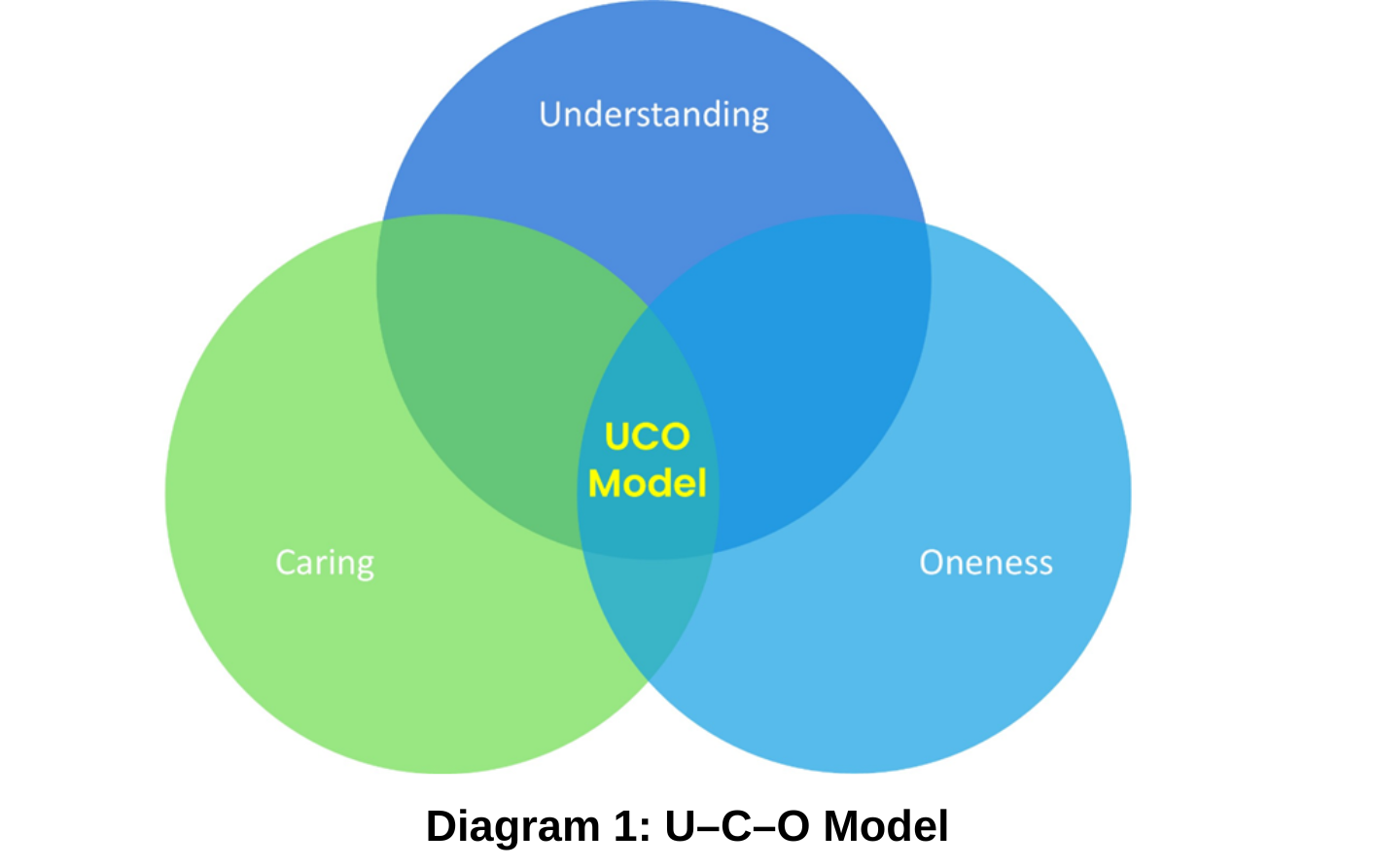
The findings indicated that “Understanding–Caring–Oneness” possessed an internal, sequential, and interrelated structure. “Understanding” served as the epistemological foundation, emphasizing comprehensive contextual awareness and responsibility for consequences. “Caring” functioned as the ethical foundation in the form of intrinsic motivation and attentiveness, transforming understanding into action that respected human dignity. “Oneness” operated as the social foundation for collaborative action toward the common good based on the acceptance of diversity. The article proposed the application of these principles as a developmental guiding process and synthesized new knowledge in the form of the U–C–O Model (Understanding–Caring–Oneness) to systematize their use in the development of individuals, leadership, organizations, and society in a profound, balanced, and sustainable manner.
References
ชัญญานุช โมราศิลป์ และทักษญา สง่าโยธิน. (2562). แนวทางการน้อมนำหลักการทรงงานของพระบาทสมเด็จพระปรมินทรมหาภูมิพลอดุลยเดช บรมนาถบพิตร ไปใช้ในการปฏิบัติงานขององค์กรธุรกิจ. Humanities social sciences and arts, 12(1), 710-735.
เมธา หริมเทพาธิป. (2559). การศึกษาตามหลักปรัชญาหลังนวยุคนิยมสายกลาง: วิเคราะห์จากหลักการทรงงานของพระบาทสมเด็จพระปรมินทรภูมิพลอดุลเดช รัชกาลที่ 9. วารสารศึกษาศาสตร์ มมร, 4(1), 120-132.
วิศิษฐ์ ฤทธิบุญไชย. (2561). การปรับใช้หลักปรัชญาของเศรษฐกิจพอเพียงที่มีผลต่อการพัฒนาคุณภาพชีวิตของนักศึกษาในจังหวัดนครปฐม. วารสารสังคมศาสตร์วิจัย, 9(2), 287-302.
สํานักงานคณะกรรมการพิเศษเพื่อประสานงานโครงการอันเนื่องมาจากพระราชดําริ (สํานักงาน กปร.). (2555). จอมปราชญ์แห่งการพัฒนา หลักการทรงงาน. กรุงเทพฯ: อมรินทร์พริ้นติ้ง แอนด์พับลิชชิ่ง จํากัด.
สำนักงานคณะกรรมการพัฒนาการเศรษฐกิจและสังคมแห่งชาติ. (2551). จากปรัชญาของเศรษฐกิจพอเพียง... สู่การปฏิบัติ. กรุงเทพฯ: เพชรรุ่งการพิมพ์ จำกัด.
สำนักงานคณะกรรมการพัฒนาการเศรษฐกิจและสังคมแห่งชาติ. (2554ก). พระมหากษัตริย์นักพัฒนา เพื่อประโยชน์สุขสู่ปวงประชา. กรุงเทพฯ: ศูนย์การพิมพ์เพชรรุ่ง.
สำนักงานคณะกรรมการพัฒนาการเศรษฐกิจและสังคมแห่งชาติ. (2554ข). เรียนรู้หลักการทรงงานในพระบาทสมเด็จพระเจ้าอยู่หัว. (พิมพ์ครั้งที่ 2). กรุงเทพฯ: สำนักงานคณะกรรมการพัฒนาการเศรษฐกิจและสังคมแห่งชาติ.
สำนักงานคณะกรรมการพัฒนาการเศรษฐกิจและสังคมแห่งชาติ. (2554ค). เรียนรู้เศรษฐกิจพอเพียง. (พิมพ์ครั้งที่ 2). กรุงเทพฯ: สำนักงานคณะกรรมการพัฒนาการเศรษฐกิจและสังคมแห่งชาติ.
สุภาพร หมั่นหาทรัพย์. (2559). การสื่อสารความรู้เรื่องการพัฒนาตามแนวพระราชดำริและหลักการทรงงานของพระบาทสมเด็จพระปรมินทรมหาภูมิพลอดุลยเดช แต่เยาวชนที่เข้าร่วมโครงการค่ายเยาวชนรู้งานสืบสานพระราชดำริ. วารสารศาสตร์มหาบัณฑิต. คณะวารสารศาสตร์และสื่อมวลชน: มหาวิทยาลัยธรรมศาสตร์.
สุเมธ ตันติเวชกุล, ดร., (2554). การทรงงานพัฒนาประเทศของพระบาทสมเด็จพระเจ้าอยู่หัว. กรุงเทพฯ: สำนักงานคณะกรรมการพัฒนาการเศรษฐกิจและสังคมแห่งชาติ.
Downloads
Published
How to Cite
Issue
Section
License
Copyright (c) 2026 Institute of Sufficiency Journal

This work is licensed under a Creative Commons Attribution-NonCommercial-NoDerivatives 4.0 International License.