Business Administration Based on the Practice of Adhitthana Paramita
Keywords:
Business, Administration, Adhitthana ParamiAbstract
This academic article aims to analyze and synthesize the concept of Adhitthana Paramita (the perfection of determination) in Theravada Buddhist philosophy and to apply it as a conceptual framework for business administration in contemporary social and economic contexts. The study positions Adhitthana Paramita as a form of ethical determination that functions as both organizational value capital and a mechanism of value-based governance. This article is based on documentary study and philosophical analysis, encompassing Buddhist scriptures, scholarly works on leadership, business ethics, and modern management theories. Through this approach, it seeks to articulate the connection between the inner dimensions of human beings and the structures and administrative processes at the organizational level.
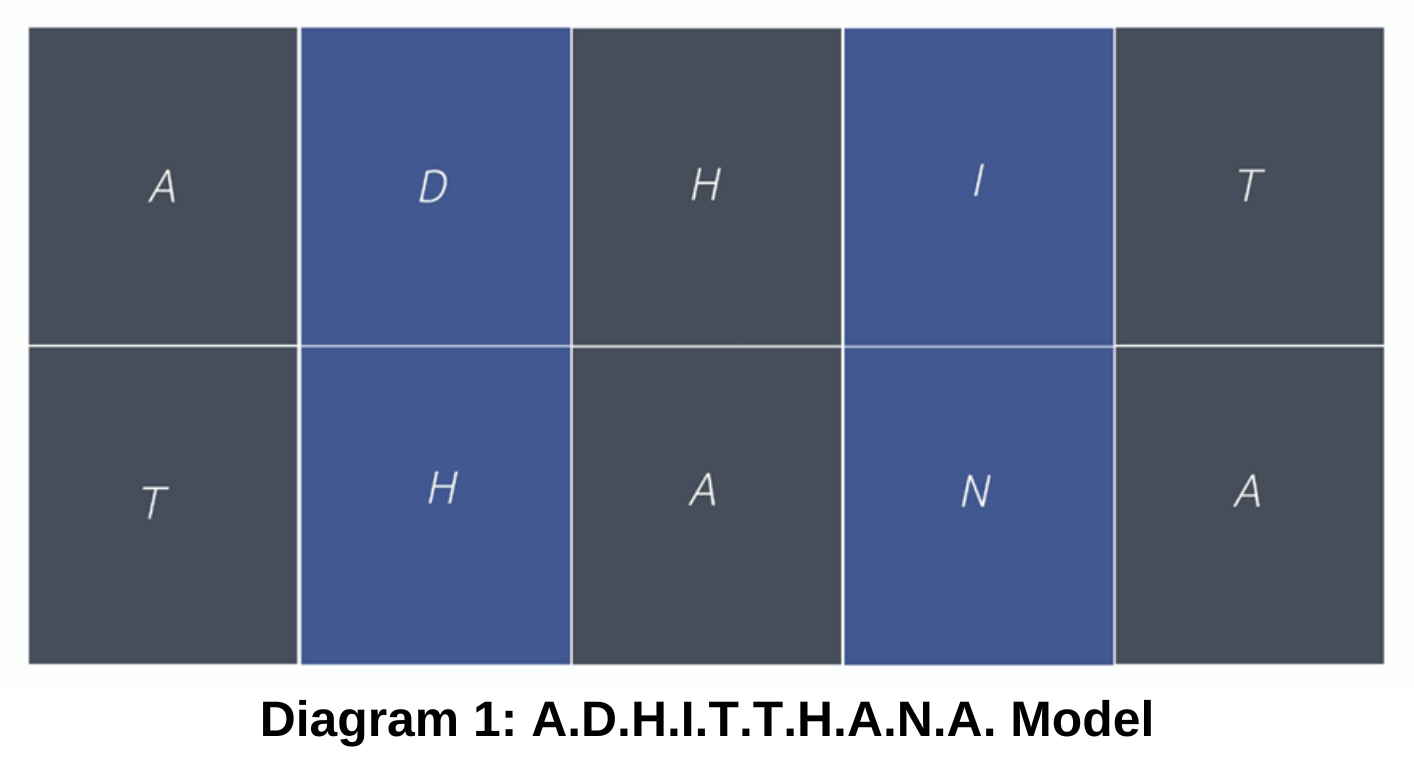
The findings indicate that Adhitthana Paramita can be extended from an individual virtue to the level of organizational culture and governance through three developmental stages: Paramita, Upaparamita, and Paramatthaparamita. These stages correspond to a shift in business goals from profit maximization toward the creation of social value and long-term sustainability. The article introduces an integrative conceptual framework, the A.D.H.I.T.T.H.A.N.A. Model, as a practical guide for policy design and management systems that align economic performance with ethical legitimacy and sustainable development.
References
พระธรรมปิฎก (ป.อ. ปยุตฺโต). (2544). พุทธธรรม. กรุงเทพฯ: มูลนิธิพุทธธรรม.
พระอธิการสุรพล. (2565). ภาวะผู้นำเชิงพุทธและขันติธรรม. วารสารวนัมฎองแหรกพุทธศาสตรปริทรรศน์, 16(2), 23–34.
ภัทร์ระพี วารีดี. (2565). ภาวะผู้นำทางจิตวิญญาณในองค์กร. กรุงเทพฯ : มหาวิทยาลัยศรีนครินทรวิโรฒ.
มะสุกรี ตายะกาเร็ง. (2564). แนวคิดภาวะผู้นำเชิงบารมีในพระพุทธศาสนา. มหาวิทยาลัยมหาจุฬาลงกรณราชวิทยาลัย.
สุภาพร พรมเถื่อน. (2554). การศึกษาแนวคิดเรื่องอธิษฐานบารมีในคัมภีร์พระพุทธศาสนาเถรวาท. กรุงเทพฯ: มหาวิทยาลัยมหาจุฬาลงกรณราชวิทยาลัย.
มหาจุฬาลงกรณราชวิทยาลัย. (2539). พระไตรปิฎกฉบับมหาจุฬาลงกรณราชวิทยาลัย. กรุงเทพฯ: โรงพิมพ์มหาจุฬาลงกรณราชวิทยาลัย.
Carroll, A. B., & Brown, J. A. (2018). Corporate social responsibility: A review of current concepts. research and issues Business & Society, 57(1), 7–23.
Drucker, P. F. (1974). Management: Tasks, responsibilities, practices. New York, NY: Harper Business.
Fayol, H. (1949). General and Industrial Management. Sir Isaac Pitman & Sons.
Harvey, P. (2013). An introduction to Buddhism: Teachings, history and practices (2nd ed.). Cambridge: Cambridge University Press.
Kast, F. E., & Rosenzweig, J. E. (1972). General systems theory: Applications for organization and management. Academy of Management Journal, 15(4), 447–465.
Mayo, E. (1933). The human problems of an industrial civilization. New York, NY: Macmillan.
Mintzberg, H. (2009). Managing. San Francisco, CA: Berrett-Koehler Publishers.
Porter, M. E. (1985). Competitive advantage: Creating and sustaining superior performance. New York, NY: Free Press.
Qirem, I. A. E., et al. (2023). The impact of sustainability accounting on financial reporting quality. Journal of Logistics, Informatics and Service Science, 10(4), 62–71.
Robbins, S. P., & Coulter, M. (2018). Management (14th ed.). Harlow: Pearson Education.
Taylor, F. W. (2012). The principles of scientific management [Kindle edition]. Dover Publications. (Original work published 1911)
Zsolnai, L. (2011). Spirituality and business: An interdisciplinary overview. Society and Economy, 34(3), 489–514.
Bodhi, B. (2005). In the Buddha’s words: An anthology of discourses from the Pali Canon. Boston, MA: Wisdom Publications.
Downloads
Published
How to Cite
Issue
Section
License
Copyright (c) 2026 Institute of Sufficiency Journal

This work is licensed under a Creative Commons Attribution-NonCommercial-NoDerivatives 4.0 International License.