The Development of Leadership through Khanti Parami Based on Theravada Buddhist Philosophy
Keywords:
Development, Leadership, Leadership Development, Khanti ParamiAbstract
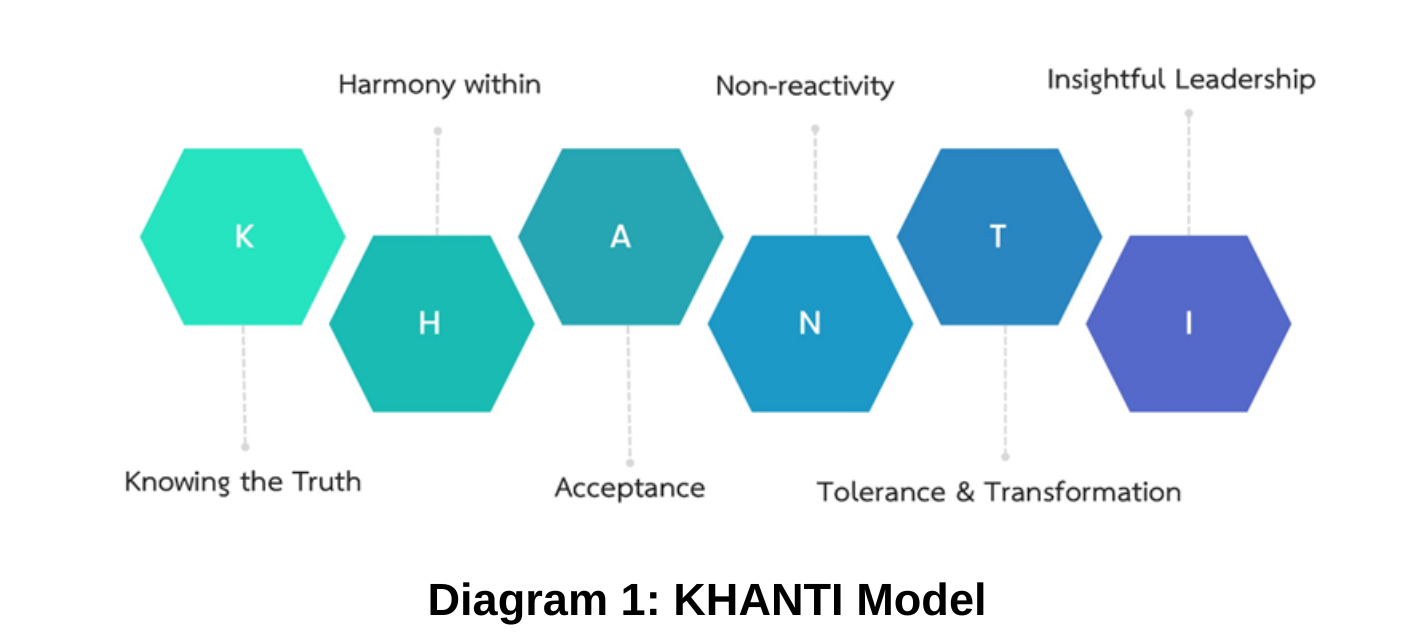
The research entitled “The Development of Leadership through Khanti Parami Based on Theravada Buddhist Philosophy” The study aims to analyze the concept of Khanti Parami in accordance with Theravada Buddhist philosophy. This study employs philosophical and documentary research methods, analyzing data from the Pali Canon, commentarial texts, Buddhist scholarly works, and research in psychology and leadership through hermeneutic analysis and cross-referencing in order to synthesize a conceptual framework.. The findings revealed that Khanti Parami was the root of all perfections (Parami) and served as a contemplative virtue that nourished and strengthened other moral qualities. In Buddhist philosophy, Khanti was not merely passive endurance but rather “patience with wisdom,” grounded in the awareness of emotions and the understanding of causal conditions. A mind trained in Khanti became calm, stable, and compassionate. Leaders who possessed Khanti Parami were able to regulate their emotions, transform suffering into wisdom, and lead through understanding rather than authority. The analysis synthesized new knowledge in the form of the KHANTI Model, which consisted of six components: K = Knowing the Truth (awareness of truth and causal conditions), H = Harmony within (inner balance and emotional stability), A = Acceptance (embracing differences with compassion), N = Non-reactivity (responding with mindfulness rather than emotion), T = Tolerance & Transformation (endurance leading to transformation), and I = Insightful Leadership (leading with wisdom and moral discernment). The new body of knowledge presented in this study proposed the KHANTI Model as an innovative framework in Buddhist psychology for leadership development. It integrated the dimensions of morality, concentration, and wisdom harmoniously, serving as a foundation for cultivating sustainable leadership at the personal, organizational, and societal levels.
References
เด่นจิตธีระพันธ์ จันทะมูล (2566). รูปแบบการพัฒนาภาวะผู้นำเชิงจริยธรรมของผู้บริหารสถานศึกษา สังกัดสำนักงานเขตพื้นที่การศึกษามัธยมศึกษากาฬสินธุ์. วิทยานิพนธ์ปริญญาครุศาสตร์ดุษฎีบัณฑิต. บัณฑิตวิทยาลัย: มหาวิทยาลัยราชภัฏมหาสารคาม.
พระครูธรรมาภิสมัย และคณะ. (2567). วิเคราะห์แนวคิดการบริหารกับการจัดการและภาวะผู้นำสู่กรอบแนวคิดเพื่อการบริหารการศึกษา. วารสารศึกษาศาสตร์ มมร, 12(1), 315-327.
พระธรรมปิฎก (ป.อ. ปยุตฺโต). (2544). พุทธธรรม. กรุงเทพฯ: โรงพิมพ์มหามกุฏราชวิทยาลัย.
พระมหาจู่ล้อม ชูเลื่อน. (2564). ความกล้าหาญทางจริยธรรมในการบำเพ็ญบารมีของพระโพธิสัตว์ในทศชาติชาดก. กรุงเทพฯ : มหาวิทยาลัยมหิดล.
พลอยไพลิน ตันเจริญพงศ์ และ จิดาภา ถิรศิริกุล. (2565). ทัศนคติของประชาชนต่อภาวะผู้นำทางการเมืองของผู้ว่าราชการกรุงเทพมหานคร. วิทยานิพนธ์รัฐศาสตรมหาบัณฑิต. บัณฑิตวิทยาลัย : มหาวิทยาลัยสยาม.
ศุภกิตติ์ เศษรักษา. (2566). การจัดการเชิงกลยุทธ์กับการพัฒนาภาวะผู้นำในยุคดิจิทัล. วารสาร JIMBA, 5(1), 1–14. สืบค้นจาก https://so15.tci-thaijo.org/index.php/jimba_journal/article/view/1197/993
Bass, B. M., & Steidlmeier, P. (1999). Ethics, Character, and Authentic Transformational Leadership Behavior. The Leadership Quarterly, 10(2), 181–217.
MDPI. (2021). Sustainable Leadership and Emotional Balance in Organizations. Sustainability, 13(21), 1-18.
Obuba, M. O. (2023). Evaluating the Moral Components of Authentic Leadership on Employees’ Productivity. A Literature Review. Open Journal of Leadership, 12(1), 89-115.
Downloads
Published
How to Cite
Issue
Section
License
Copyright (c) 2026 Institute of Sufficiency Journal

This work is licensed under a Creative Commons Attribution-NonCommercial-NoDerivatives 4.0 International License.