The Application of the 22th Royal Working Principle : Perseverance
Keywords:
Application, 22th Royal Working Principle, PerseveranceAbstract
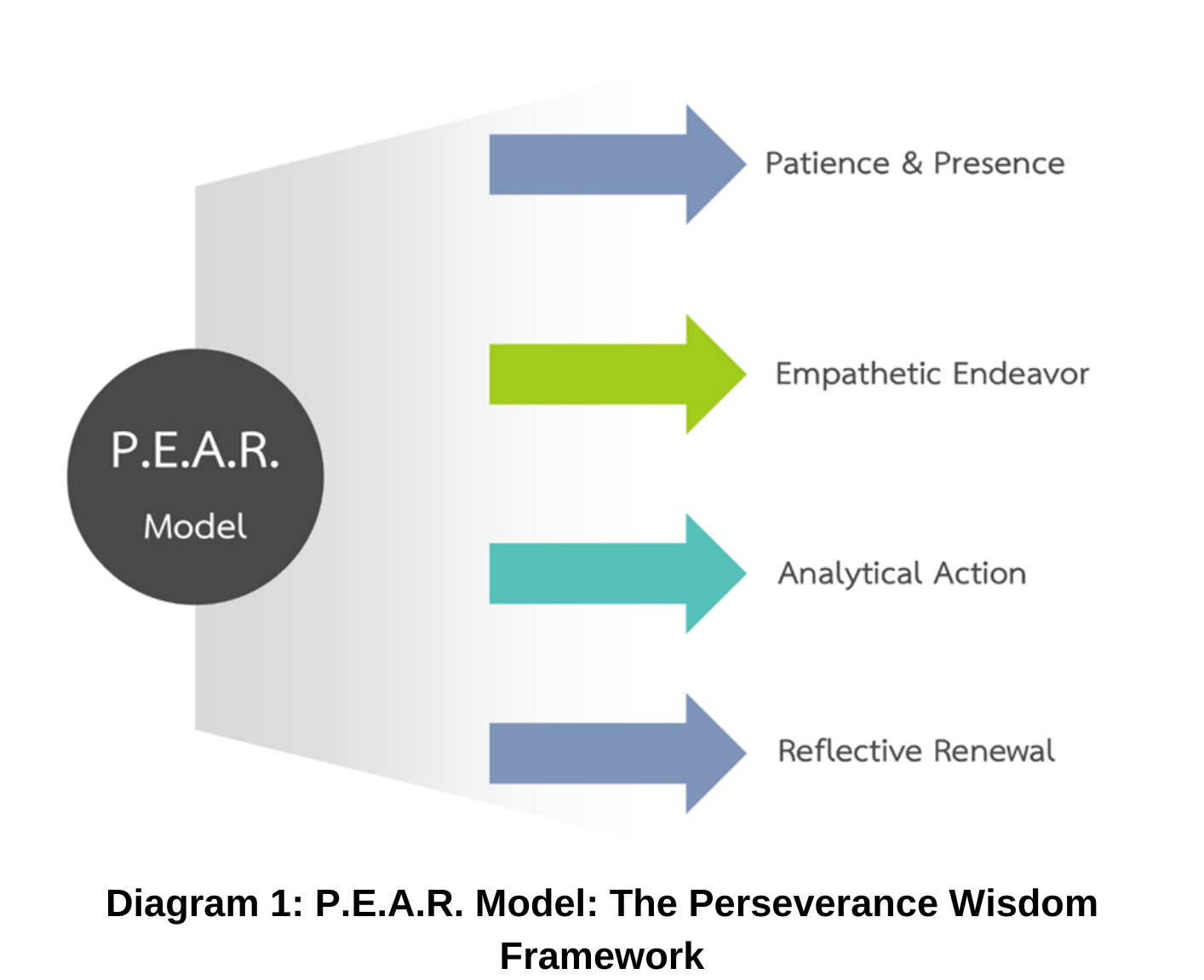
This article aimed to study the application of the 22nd Royal Working Principle, “Perseverance,” as a philosophical foundation for work and life according to the King’s Philosophy. The objectives of the study were: 1. To analyze the concept and essence of “Perseverance” under the Royal Working Principles from a philosophical perspective, and 2. To examine the application of Perseverance in daily life and work practices. The findings revealed that Perseverance, as reflected in the Royal Thought, was not about haste or struggle, but rather about acting with mindfulness, wisdom, and continuity until achieving a balance between action and mental stability. The philosophical analysis compared Perseverance to Samma Vayama in Buddhist teaching, which emphasizes the right effort to abandon unwholesome states and to cultivate wholesome ones continuously. The study synthesized the “PERSEVERE Process” (9 steps) to transform Perseverance into a developmental process and proposed the “P.E.A.R. Model” (Patience & Presence, Empathetic Endeavor, Analytical Action, Reflective Renewal) to illustrate the inner structure of Perseverance as a form of wisdom in practice. The synthesis indicated that Perseverance represented a dynamic form of wisdom integrating awareness, action, and reflection, which led individuals, organizations, and societies toward sustainable development from within. Ultimately, this principle embodied the essence of the King’s Philosophy - a way of life grounded in inner stability, balance, and continuous self-development.
References
คณิตา หอมทรัพย์. (2562). พระราชนิพนธ์เรื่องพระมหาชนกในพระบาทสมเด็จพระบรมชนกาธิเบศร มหาภูมิพลอดุลยเดชมหาราช บรมนาถบพิตร:ความสำคัญต่อการขับเคลื่อนแนวพระราชดำริและยุทธศาสตร์การพัฒนาประเทศ. วารสารมนุษยศาสตร์ มหาวิทยาลัยนเรศวร, 17(3), 77–94.
ณัฐพงศ์ แย้มเจริญ. (2544). วาทกรรมวิเคราะห์พระราชนิพนธ์เรื่องพระมหาชนก. ปริญญานิเทศศาสตรมหาบัณฑิต. คณะนิเทศศาสตร์ : จุฬาลงกรณ์มหาวิทยาลัย.
พระครูพินัยสังฆการ (สมชาย จิตฺตคุตฺโต). (2562). แนวทางการเสริมสร้างความเพียรแก่เยาวชนไทยในสังคมปัจจุบัน. วารสาร มจร ปรัชญาปริทรรศน์, 2(2), 16–23.
พระพรหมคุณาภรณ์ (ป.อ. ปยุตฺโต). (2555). พจนานุกรมพุทธศาสตร์ ฉบับประมวลธรรม. กรุงเทพมหานคร: มหาจุฬาลงกรณราชวิทยาลัย.
สำนักงานคณะกรรมการพิเศษเพื่อประสานงานโครงการอันเนื่องมาจากพระราชดำริ. (2568). พระราชดำรัส พระบาทสมเด็จพระบรมชนกาธิเบศร มหาภูมิพลอดุลยเดชมหาราช ด้านหลักปฏิบัติงานโครงการพัฒนา. สืบค้นเมื่อ [6 ตุลาคม 2568], จาก https://www.rdpb.go.th/th/King/พระราชดำรัส-หลักปฏิบัติงานโครงการพัฒนา
สำนักงานคณะกรรมการพิเศษเพื่อประสานงานโครงการอันเนื่องมาจากพระราชดำริ. (2568). ข้อ 22 ความเพียร. สืบค้นเมื่อ [6 ตุลาคม 2568], จาก https://www.rdpb.go.th/th/King/หลักการทรงงาน-c24/93-ความเพียร-v9189
Bauman, Z. (1993). Postmodern ethics. Oxford: Blackwell.
Dweck, C. (2006). Mindset: The new psychology of success. New York: Random House.
Porpeang.org. (2021, December 20). ข้อ 22. ความเพียร. สืบค้นจาก https://www.porpeang.org/content/5355/ข้อ-22-ความเพียร
Downloads
Published
How to Cite
Issue
Section
License
Copyright (c) 2026 Institute of Sufficiency Journal

This work is licensed under a Creative Commons Attribution-NonCommercial-NoDerivatives 4.0 International License.