
Development of Combined and Joint Training in the Royal Thai Navy
Article Sidebar
Main Article Content
Abstract
To ensure that personnel achieve professional proficiency in performing assigned missions, Royal Thai Navy personnel must undergo systematic training until a high level of competence is attained. Moreover, fostering trainees’ willingness and active participation in training requires deliberate development in training design prior to execution. This preparatory phase constitutes a critical component of training management and is closely linked to the fundamental question of how forces are expected to fight.
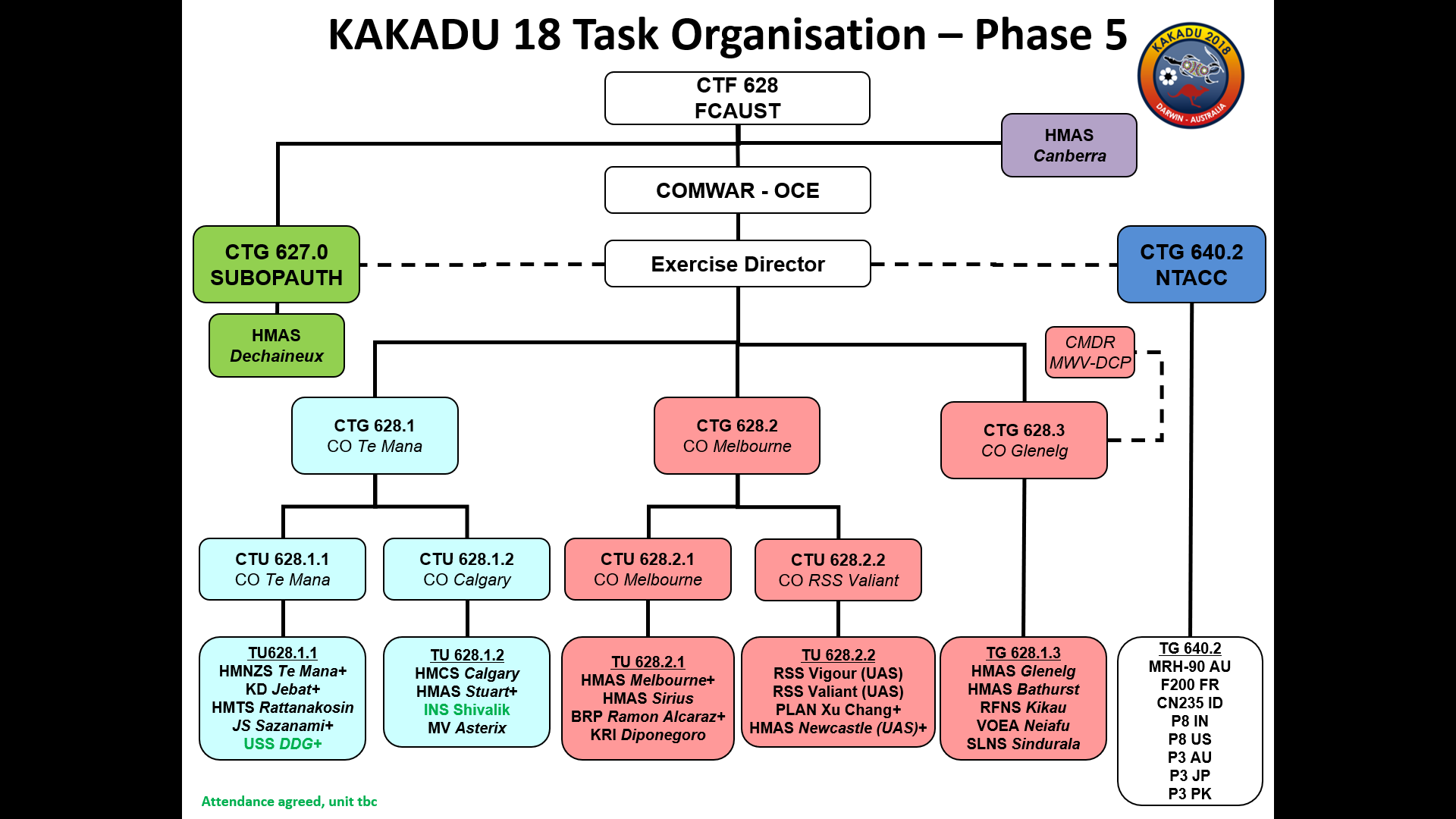
In this regard, the author presents the KAKADU Exercise as an illustrative example of effective training design. KAKADU is a multilateral combined naval exercise conducted between national navies and international partner navies. The exercise is held biennially, hosted by the Royal Australian Navy, and conducted in the northern maritime areas near Darwin, Commonwealth of Australia. The author considers this exercise design to be adaptable and applicable to training development within the Royal Thai Navy.
In the training planning process, several key elements must be incorporated as inputs for synthesizing a coherent training concept. These include commanders’ training policies, the Navy’s institutional vision, and the desired outcomes derived from lessons learned from previous exercises—focusing on improvement, further development, and the avoidance of repeated shortcomings. Additional essential factors include the allocated training budget, as well as the availability of personnel and military equipment participating in the exercise. Once these elements are comprehensively identified, the training designer can analyze them holistically and conceptualize a complete and integrated training framework capable of effectively supporting operational readiness and mission success.
Downloads
Article Details

This work is licensed under a Creative Commons Attribution-NonCommercial-NoDerivatives 4.0 International License.
Articles in this journal are copyrighted by the Naval Strategic Studies Center, Naval Education Department, and published under the Creative Commons Attribution-NonCommercial-NoDerivatives 4.0 International (CC BY-NC-ND 4.0) license.
may be read and used for academic purposes, such as teaching, research, or citation, with proper credit given to the author and the journal.
Use or modification of the articles is prohibited without permission.
Statements expressed in the articles are solely the opinions of the authors.
Authors are fully responsible for the content and accuracy of their articles.
Any other republication of the articles requires permission from the journal.
References
EXERCISE INTRUCTION EXERCISE KAKADU
EXERCISE PLANNIG GUIDE KAKADU
MULTI NATIONAL EXERCISE MANUAL
