
The The Changing Security Environment and the Critical Role of Naval Intelligence
Article Sidebar
Main Article Content
Abstract
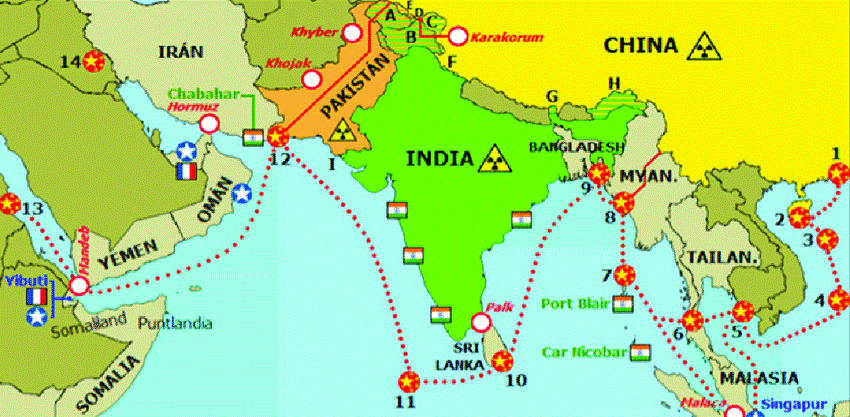
The expansion of China’s influence in the Asia–Pacific region has generated concern and strategic anxiety among major powers, particularly the United States, potentially leading to friction between the two great powers. In addition, challenges have emerged from U.S. allies and partners in the region that have pursued strategies of close alignment with the United States in a coordinated manner. This has contributed to strained relations between China and several countries, including India, Japan, and members of the AUKUS partnership, which may eventually result in the use of military force and armed confrontation in the South China Sea in the future.
Within this continuously evolving security environment, both traditional and non-traditional threats persist, alongside the current emergence and spread of novel infectious diseases. These developments are expected to intensify in severity and significantly affect the operational effectiveness of security agencies, particularly in terms of budgetary constraints and management challenges. Consequently, the availability of reliable and actionable information that can guide decision-making and enhance unit preparedness in appropriate directions is a critical factor in mitigating such constraints, especially by reducing the overall burden on limited defense budgets.
Accurate and timely security situation analysis requires several essential components. These include well-trained and experienced personnel across all stages of the intelligence cycle; modern, reliable technological tools and equipment; and robust communication networks capable of transmitting information in real time. At the same time, comprehensive capabilities for counterintelligence and information security must be in place to prevent data espionage. Situation analysis constitutes one of the core operational domains of naval military intelligence and must be conducted in parallel with the formulation of balanced policies for fostering cooperative relationships with foreign navies and maritime security agencies.
Accordingly, it is imperative to establish clear guidelines for the continuous improvement and development of naval intelligence in alignment with the dynamically changing security environment, while operating under budgetary limitations arising from broader economic conditions. This effort should be guided by sound management principles at the individual, material, and tactical levels. Moreover, enhancing shared awareness and mutual understanding among maritime security stakeholders—including government agencies, the private sector, and the public—is essential. Such an inclusive approach will enable naval intelligence to serve as a key driving force in supporting the Royal Thai Navy’s ability to achieve its long-term, 20-year vision in a concrete and sustainable manner.
Downloads
Article Details

This work is licensed under a Creative Commons Attribution-NonCommercial-NoDerivatives 4.0 International License.
Articles in this journal are copyrighted by the Naval Strategic Studies Center, Naval Education Department, and published under the Creative Commons Attribution-NonCommercial-NoDerivatives 4.0 International (CC BY-NC-ND 4.0) license.
may be read and used for academic purposes, such as teaching, research, or citation, with proper credit given to the author and the journal.
Use or modification of the articles is prohibited without permission.
Statements expressed in the articles are solely the opinions of the authors.
Authors are fully responsible for the content and accuracy of their articles.
Any other republication of the articles requires permission from the journal.
References
แผนแม่บทการพัฒนากองทัพเรือด้านการข่าว พ.ศ.๒๕๖๐ – ๒๕๗๙
นโยบายผู้บัญชาการทหารเรือ ประจำปีงบประมาณ ๒๕๖๕
Herman, Michael. (2001). Intelligence Services in the Information Age: Theory and Practice. Portland: Frank Cars
Kaplan, Robert D. (2010). The Geography of Chinese Power. A publication of Council on Foreign Relations. Volume: 89, Issue:3 (May/June 2010).
Leah Sherwood. (2016). Small States’ Strategic Hedging for Security and Influence. สืบค้นเมื่อ ๑๒ ธันวาคม ๒๕๖๔ จาก https://trendsresearch.org/
https://www.chinausfocus.com/peace-security/the-nine-dash-line-and-its-basis-in-international-law
https://www.hamodia.com/2013/02/05/drones-on-the-ground-to-help-with-intelligence-gathering/
https://www.ips-intelligence.com/en/maritime-intelligence
https://j2.rtarf.mi.th/wordpress
www.navalnews.com/naval-news/2021/11/aukus-australia-signs-naval-nuclear-propulsion-information-sharing-agreement/
