
The The Intellectual Legacy of Emperors in the Construction of Peace in the Contemporary World
Article Sidebar
Main Article Content
Abstract
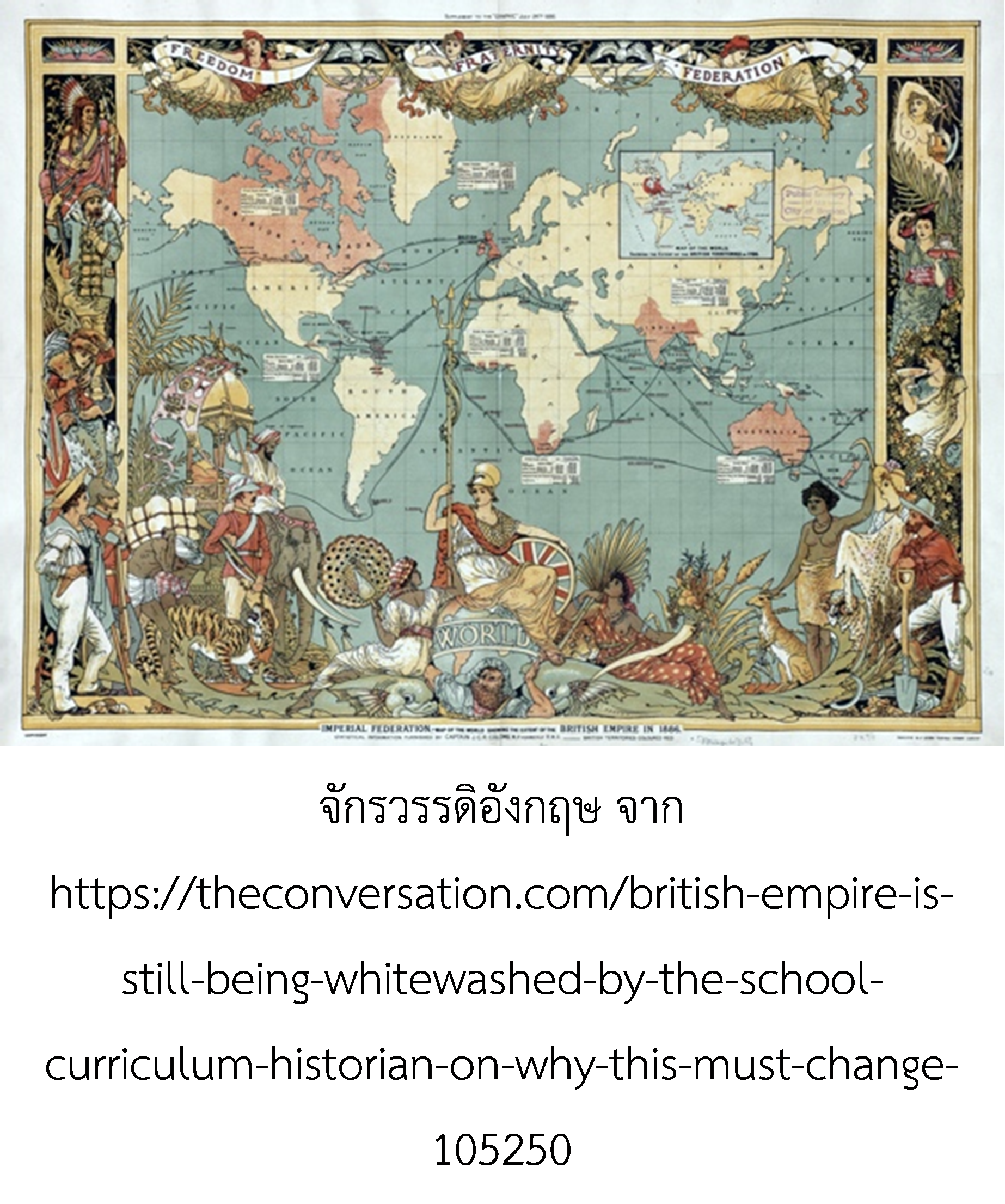
This article aims to address the question of how contemporary world peace can be explained from the perspective of the English School. The English School is grounded in the concepts of natural law and order in international society, which constitute an intellectual legacy derived from Britain’s imperial history in the nineteenth century and were subsequently carried forward by the United States after the Second World War and throughout the Cold War under the banner of the liberal international order. The principal instruments for maintaining this liberal world order include military power—particularly maritime power—as well as liberal international mechanisms, namely free-market capitalism, democratic governance, and international organizations. Taken together, these elements are summarized as liberalism. When considering the rise of China as a great power, it becomes evident that although China’s political system remains socialist and communist in nature, it nevertheless depends on the liberal international order for its future growth. In the contemporary world, liberalism is widely regarded as the final political ideology of humankind.
Downloads
Article Details

This work is licensed under a Creative Commons Attribution-NonCommercial-NoDerivatives 4.0 International License.
Articles in this journal are copyrighted by the Naval Strategic Studies Center, Naval Education Department, and published under the Creative Commons Attribution-NonCommercial-NoDerivatives 4.0 International (CC BY-NC-ND 4.0) license.
may be read and used for academic purposes, such as teaching, research, or citation, with proper credit given to the author and the journal.
Use or modification of the articles is prohibited without permission.
Statements expressed in the articles are solely the opinions of the authors.
Authors are fully responsible for the content and accuracy of their articles.
Any other republication of the articles requires permission from the journal.
References
E. H. Carr, The Twenty Years' Crisis, 1919-1939, reissued with a new preface from Michael Cox (London: Palgrave Macmillan, 2016), p. 19.
Hedley Bull, The Anarchical Society: A Study of Order in World Politics, 3rd ed. (London: Palgrave, 2002), pp. 1-72.
Angus Maddison, The World Economy: A Millennial Perspective (Paris: Organisation for Economic Co-operation and Development, 2001), p. 97.
Rein Taagepera, “Expansion and Contraction Patterns of Large Polities: Context for Russia” International Studies Quarterly 41, 3 (September 1997): 475-504.
“The World Factbook – Central Intelligence Agency” www.cia.gov. Archived from the original on 5 January 2010.
Ashley Jackson, The British Empire: A Very Short Introduction. (Oxford: 2013), pp. 5-6.
Niall Ferguson, Empire: The Rise and Demise of the British World Order and the Lessons for Global Power (New York: Basic Books. 2004), p. 3.
Thomas Oatley, International Political Economy, 6th ed. (London: Routledge, 2019), p. 33.
Alfred Thayer Mahan, The Influence of Sea Power upon History 1660-1783, 15th ed. (Boston: Little, Brown, and Company, 1898), p. 1.
John Locke, Two Treatises of Government, edited by Thomas I. Cook (New York: Hafner Press, 1974)
Beate Jahn, Liberal Internationalism: Theory, History, Practice (New York, NY: Palgrave Macmillan, 2013)
Karen Rasler and William R. Thompson, Puzzles of the Democratic Peace: Theory, Geopolitics and the Transformation of World Politics (New York: Palgrave Macmillan, 2005)
Immanuel Kant, “Toward Perpetual Peace: A Philosophical Sketch,” in Toward Perpetual Peace and Other Writings on Politics, Peace, and History, edited and with an introduction by Pauline Kleingeld; translated by David L. Colclasure (New Haven: Yale University Press, 2006)
ขจรศักดิ์ สิทธิ, “แนวคิดทฤษฎีความสัมพันธ์ระหว่างประเทศกระแสหลัก,” ใน เอกสารการสอนชุดวิชาความสัมพันธ์ระหว่างประเทศ (นนทบุรี: สำนักพิมพ์ มสธ., ๒๕๕๕), หน่วยที่ ๓ หน้า ๑๗.
คาร์ล โปลานยี, เมื่อโลกพลิกผัน: การปฏิวัติอุตสาหกรรม จุดกำเนิดการเมืองและเศรษฐกิจยุคปัจจุบัน (The Great Transformation: The Political and Economic Origins of Our Time), แปลโดย ภัควดี วีระภาสพงษ์; คำนำเสนอโดย พิชิต ลิขิตกิจสมบูรณ์ (นนทบุรี: ฟ้าเดียวกัน, ๒๕๕๙)
