
Mercenaries and Modern Warfare
Article Sidebar
Main Article Content
Abstract
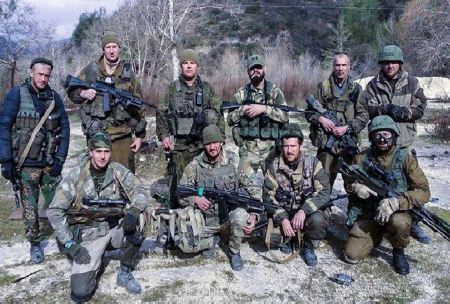
Contemporary conflicts and wars involve both state and non-state actors employing power across multiple domains in pursuit of victory for their side or their nation. Economic power and financial resources have become decisive factors that transform warfare into a new form often described as private warfare. Although the use of mercenaries has existed since ancient times—whether openly or covertly—the employment of such forces in modern conflicts for private gain contributes to the prolongation of hostilities. In the future, this trend may evolve into a long-term threat to global peace, as considerations related to humanitarian principles and human rights tend to diminish.
Moreover, enforcing legal measures against these groups is exceedingly difficult, as much of their activity is conducted in secrecy. Consequently, as private conflicts expand onto the international stage, the world may eventually witness wars driven primarily by private interests emerging in various regions across the globe.
Downloads
Article Details

This work is licensed under a Creative Commons Attribution-NonCommercial-NoDerivatives 4.0 International License.
Articles in this journal are copyrighted by the Naval Strategic Studies Center, Naval Education Department, and published under the Creative Commons Attribution-NonCommercial-NoDerivatives 4.0 International (CC BY-NC-ND 4.0) license.
may be read and used for academic purposes, such as teaching, research, or citation, with proper credit given to the author and the journal.
Use or modification of the articles is prohibited without permission.
Statements expressed in the articles are solely the opinions of the authors.
Authors are fully responsible for the content and accuracy of their articles.
Any other republication of the articles requires permission from the journal.
References
๑. https://ndupress.ndu.edu/Media/News/Article/2031922/
mercenaries-and-war-understanding-private-armies-today/
๒. Guiora, Amos N., ed. (2009). Top Ten Global Justice Law Review Articles
Oxford University Press. p. 175. ISBN 978-0195399752.
๓. Heather Elms and Robert A. Phillips, “Private Security Companies and
Institutional Legitimacy: Corporate and Stakeholder Responsibility,”
Business Ethics Quarterly 19, no. 3 (2009), 403–432; Deborah D. Avant,
“Pragmatic Networks and Transnational Governance of Private Military and
Security Services,” International Studies Quarterly 60, no. 2 (2016), 330–342;
Andreas Kruck, “Theorising the Use of Private Military and Security
Companies: A Synthetic Perspective,” Journal of International Relations and
Development 17, no. 1 (2014), 112–141; and James Pattison, The Morality
of Private War: The Challenge of Private Military and Security Companies
(Oxford: Oxford University Press, 2014).
๔. Harvey Morris, “Activists Turn to Blackwater for Darfur Help,” Financial
Times, June 18, 2008, available at
dd-bbb5-0000779fd2ac>.
๕. Ilya Barabanov & Nader Ibrahim, https://www.bbc.com/news/worldafrica-
๖. https://ndupress.ndu.edu/Media/News/Article/2031922/
mercenaries-and-war-understanding-private-armies-today/
๗. International Organization for Standardization (ISO) 28007-1:2015, Ships and
Marine Technology: Guidelines for Private Maritime Security Companies
(PMSC) ProvidingPrivately Contracted Armed Security Personnel (PCASP) on
Board Ships (and Pro FormaContract) (Geneva: ISO, April 1, 2015).
๘. Dionne Searcey, Gems, Warlords and Mercenaries: Russia’s Playbook
in Central African Republic, N.Y. Times (Sept. 30, 2019),
https://www.nytimes.com/2019/09/30/world/russia-diamonds-africaprigozhin.
html. See also Ep. 62: Wagner and Russian Private Military
Contractors, Def. One (Jan. 15, 2020), https://www.defenseone.com
ideas/2020/01ep-62-wagner-and-russian-private-military-contractors/162447/
๙. Anna Borshchevskaya, Russian Private Military Companies: Continuity and
Evolution of the Model, Foreign Pol’y Rsch. Inst. 1 (Dec. 2019), https://www.
fpri.org/wp-content/uploads/2019/12/rfp4-borshchevskaya-fi nal.pdf
