
The Role of Advanced Cyber Capabilties and Its Implications to
Article Sidebar
Main Article Content
Abstract
This article examines the advancements in cyber capabilities and their implications for future naval operations, highlighting that cyberspace has emerged as a critical domain of modern conflict. States are no longer utilizing cyberattacks merely for data access or destruction; instead, they have evolved toward sophisticated, integrated attacks leveraging emerging technologies such as Artificial Intelligence (AI) to enhance efficiency and secure a competitive advantage across all interconnected battlefield dimensions.
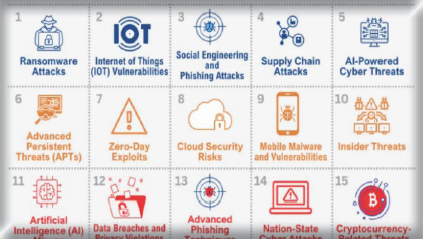
Case studies from the Russia-Ukraine war, alongside the cyber capabilities of nations such as China and Israel, demonstrate that cyber operations can significantly degrade military effectiveness and alter strategic outcomes. Future threat trends—including Ransomware, Advanced Persistent Threats (APTs), Supply Chain Attacks, and AI-powered threats—will further increase the complexity and impact on Critical Information Infrastructure (CII).
This is particularly vital in the context of naval operations, which must now integrate offensive and defensive cyber capabilities across every domain (surface, subsurface, air, space, and cyber) to gain superiority and neutralize adversary potential. Consequently, this article proposes that advanced cyber capabilities will serve as the backbone of future naval warfare under the framework of Network-Centric Warfare (NCW).
Downloads
Article Details

This work is licensed under a Creative Commons Attribution-NonCommercial-NoDerivatives 4.0 International License.
Articles in this journal are copyrighted by the Naval Strategic Studies Center, Naval Education Department, and published under the Creative Commons Attribution-NonCommercial-NoDerivatives 4.0 International (CC BY-NC-ND 4.0) license.
may be read and used for academic purposes, such as teaching, research, or citation, with proper credit given to the author and the journal.
Use or modification of the articles is prohibited without permission.
Statements expressed in the articles are solely the opinions of the authors.
Authors are fully responsible for the content and accuracy of their articles.
Any other republication of the articles requires permission from the journal.
References
Admass, W. S., Munaye, Y. Y., & Diro, A. A. (2024). Cyber security: State of the art, challenges and future directions. Cyber Security and Applications, 2.
Ahmed, A. M., Hussaini, A., & Abdulhamid, A. (2022). Cyber Warfare And National Security: Imperative For Naval Operations. 2022 International Conference on Computational Science and Computational Intelligence (CSCI). IEEE. doi: 10.1109/CSCI58124.2022.00176
Andre Smit, และ Jamila Hammami. (2023). Cyberwarfare and the Maritime Domain. Korea Institute for Maritime Strategy.
Bonnie Johnson, John M. Green, Gregory Burns, Todd Collier, Richard Cornish, Kyle Curley, . . . Jared Spears. (2023). Mapping Artificial Intelligence to the Naval Tactical Kill Chain. Naval Engineers Journal, 155-167.
Dowse, A. (2018). The Need for Trusted Autonomy in Military Cyber Security. Foundations of Trusted Autonomy, 203-213.
Eyal Pinko. (2023). The Cyber Domain in the Russo-Ukraian War. The Begin-Sadat Center for Strategic Studies.
Howard, T., & de Arimateia da Cruz, J. (2017, 01 17). A Cyber Vulnerability Assessment of the U.S.Navy in the 21st Century. Retrieved 01 25, 2025, from CIMSEC: https://cimsec.org/cyber-vulnerability-assessment-u-s-navy-21st-century/
Kramer, A. E. (2022). Hacker Bring Down Dovernment Sites in Ukaine. The New York Times.
Max Smeets. (2019). NATO members' Organizatioinal Path Towards Conducting Offensive Cyber Operation: A Framework for Analysis. 2019 11th International Conference on Cyber Conflict (หน้า 1-15). Tallinn: NATO CCD COE Publications.
Meadors, T. B. (2022, September). Cyber Warfare Is a Navy Mission. Retrieved from U.S. Naval Institute: https://www.usni.org/magazines/proceedings/2022/september/cyber-warfare-navy-mission
Microsoft. (2022). Defending Ukeaine: Early Lessons from the Cyber War. Washington: Microsoft Corporation.
Prajwal. (2023, 08 10). Sprintzeal. Retrieved 01 25, 2025, from https://www.sprintzeal.com/blog/top-cybersecurity-threats
Tangredi, S., & Galdorisi, G. (2021). AI at War. USA: U.S. Naval Institute.
กรกช วิไลลักษณ์. (2021). พัฒนาการช่วงชิงความได้เปรียบบนไซเบอร์โดเมน. ใน นาวิกาธิปัตย์สาร ฉบับที่ 101 45-1.
กรกช วิไลลักษณ์. (2022). สงครามไซเบอร์และพัฒนาการการปฏิบัติการไซเบอร์ในอนาคต. นาวิกาธิปัตย์สาร, ฉบับที่ 102 45-2.
