การเปลี่ยนแปลงโครงสร้างประชากรเข้าสู่สังคมสูงอายุต่อความเหลื่อมล้ำทางรายได้ในระดับภูมิภาคของประเทศไทย
Article Sidebar
Main Article Content
บทคัดย่อ
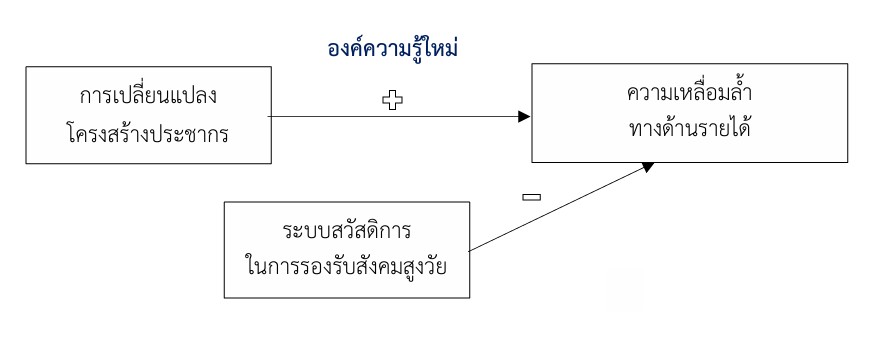
บทความวิจัยนี้มีวัตถุประสงค์เพื่อศึกษาผลกระทบของการเปลี่ยนแปลงโครงสร้างประชากรเข้าสู่สังคมสูงอายุต่อความเหลื่อมล้ำในประเทศไทย การวิจัยครั้งนี้เป็นการวิจัยเชิงปริมาณโดยใช้ข้อมูลทุติยภูมิ เครื่องมือที่ใช้เก็บรวบรวมข้อมูล ได้แก่ ข้อมูลพาแนลระดับภูมิภาครายปี พ.ศ. 2555–2566 จากแหล่งสถิติทางการของประเทศ สถิติที่ใช้ในการวิเคราะห์ข้อมูล ได้แก่ การทดสอบความสัมพันธ์ร่วมในระยะยาวของข้อมูลพาแนล (Panel Cointegration Test) ด้วยวิธี Kao Residual Test และการประมาณค่าแบบจำลองระยะยาวด้วยวิธี Fully Modified Ordinary Least Squares (FMOLS) เพื่อศึกษาความสัมพันธ์ในระยะยาวและควบคุมความแตกต่างเชิงพื้นที่ระหว่างภูมิภาค ผลการศึกษาพบว่า 1) อัตราส่วนพึ่งพิงวัยเด็ก (Ydep) และสัดส่วนผู้สูงอายุ (Ages) มีความสัมพันธ์เชิงบวกกับความเหลื่อมล้ำ ซึ่งเป็นแรงกดดันที่ทำให้เพิ่มความเหลื่อมล้ำ เนื่องจากครัวเรือนต้องแบกรับภาระทางเศรษฐกิจของผู้สูงอายุที่สูงขึ้น 2) อัตราส่วนพึ่งพิงวัยสูงอายุ (Odep) มีความสัมพันธ์เชิงลบกับความเหลื่อมล้ำในบางบริบท และผลิตภัณฑ์มวลรวมรายภาค (GRP) มีบทบาทสำคัญในการลดความเหลื่อมล้ำ 3) สัดส่วนคนจน (Poor) และหนี้สินครัวเรือน (Debt) เป็นปัจจัยสำคัญที่เพิ่มความเหลื่อมล้ำอย่างมีนัยสำคัญ และพบความแตกต่างของระดับความเหลื่อมล้ำพื้นฐานในแต่ละภูมิภาค ซึ่งชี้ให้เห็นว่านโยบายลดความเหลื่อมล้ำควรคำนึงถึงความต้องการเฉพาะแต่ละพื้นที่มากกว่าการใช้มาตรการเดียวกันทั่วประเทศ
Article Details

อนุญาตภายใต้เงื่อนไข Creative Commons Attribution-NonCommercial-NoDerivatives 4.0 International License.
เอกสารอ้างอิง
กรมการปกครอง. (2566). ตัวชี้วัดประเทศไทย 2567: ความเปลี่ยนแปลงด้านประชากรสังคมและเศรษฐกิจ. สืบค้นจาก https://www.nso.go.th/public/e-book/Indicators-Thailand/Thailand-Indicators-2567/22/.
กฤษฎา วัฒนเสาวลักษณ์. (2557). การเปลี่ยนแปลงโครงสร้างประชากรกับความอยู่ดีกินดีของคนไทย. NIDA Development Journal, 54(1), 143–170.
โชติกา ศุภนภาโสตถิ์. (2559). พฤติกรรมและรูปแบบการออมของแรงงานนอกระบบ. (เศรษฐศาสตรมหาบัณฑิต, สถาบันบัณฑิตพัฒนบริหารศาสตร์).
ฐิติรัศญาณ์ แก่นเพชร และ สำนักงานส่งเสริมและสนับสนุนวิชาการ 7. (2568). รูปแบบที่เหมาะสมในการเตรียมความพร้อมและความเท่าทันทางการเงินสำหรับคนก่อนวัยเกษียณ เพื่อสร้างหลักประกันที่มั่นคงสำหรับการเข้าสู่วัยผู้สูงอายุ: กรณีศึกษา ภาคกลางตอนบนและภาคเหนือตอนล่าง. วารสารสมาคมนักวิจัย, 30(1), 167–190.
ธนาคารโลก. (2568). GDP (current LCU) - Thailand. สืบค้นจาก https://data.worldbank.org/indicator/NY.GDP.MKTP.CN?locations=TH.
พลพิพัฒน์ วัฒนเศรษฐานุกุล, นิษฐ์ฐา พีระชัยภาวงศ์, ขวัญสุดา วงษ์แหยม และ เสาวนีย์ ธีระกาญจน์. (2568). การพัฒนาหลักสูตรความฉลาดรู้ทางการเงินสำหรับครูในยุคดิจิทัล. วารสารสมาคมพัฒนาวิชาชีพการบริหารการศึกษาแห่งประเทศไทย, 7(3), 694-711.
มัทยา บุตรงาม. (2555). ความสัมพันธ์ระหว่างความเหลื่อมล้ำทางการศึกษาและความเหลื่อมล้ำทางรายได้ในประเทศไทย. (เศรษฐศาสตรมหาบัณฑิต, จุฬาลงกรณ์มหาวิทยาลัย).
สถาบันวิจัยเพื่อการพัฒนาประเทศไทย (TDRI). (2564). “สวัสดิการ ไม่ใช่การสงเคราะห์” ทีดีอาร์ไอ เสนอปรับสวัสดิการรับโลกใหม่ไร้ตกหล่น เน้น “คน” เป็นศูนย์กลาง เปิดทางเอกชน ประชาสังคมเข้าร่วม. สืบค้นจาก https://tdri.or.th/2021/11/social-protection-annual-con-2021/.
สำนักงานคณะกรรมการส่งเสริมวิทยาศาสตร์ วิจัยและนวัตกรรม. (2564). ช่องว่างความรู้เกี่ยวกับการรับมือการเปลี่ยนแปลงโครงสร้างประชากร. สืบค้นจาก https://researchcafe.tsri.or.th/population-structure/.
สำนักงานสภาพัฒนาการเศรษฐกิจและสังคมแห่งชาติ. (2565). สำรวจสถานการณ์ความเหลื่อมล้ำของประเทศไทย. สืบค้นจาก https://sdgs.nesdc.go.th/thailands-sdg-review-the-series-ep-8/.
สำนักงานสภาพัฒนาการเศรษฐกิจและสังคมแห่งชาติ. (2567). รายงานสถานการณ์ความยากจนและความเหลื่อมล้ำของประเทศไทย ปี 2567. กรุงเทพฯ: สำนักงานสภาพัฒนาการเศรษฐกิจและสังคมแห่งชาติ.
สุวคนธ์ ซ้ายขวา. (2562). ผลกระทบของหนี้ครัวเรือนต่อความเหลื่อมล้ำทางรายได้ของประเทศไทย. (เศรษฐศาสตรมหาบัณฑิต, สถาบันบัณฑิตพัฒนบริหารศาสตร์).
เสริมสกุล บุญภักดี. (2556). ผลกระทบของอัตราเงินเฟ้อที่มีต่อความไม่เท่าเทียมทางรายได้ในประเทศไทย. (เศรษฐศาสตรมหาบัณฑิต, มหาวิทยาลัยเชียงใหม่).
Kuznets, S. (1955). Economic Growth and Income Inequality. American Economic Review, 45(1), 1–28.
Lee, J.-W., & Lee, H. (2018). Human Capital and Income Inequality (ADBI Working Paper No. 810). Tokyo: Asian Development Bank Institute.
McLean-Shinaman, D. (2016). A panel data analysis on globalization and income inequality. Empirical Economic Bulletin, An Undergraduate Journal, 9(1), 1-16.
Statista. (2024). Thailand: Forecast aging population. Retrieved from https://www.statista.com/statistics/713667/thailand-forecast-aging-population/.
Stewart, F. (1999). Crisis Prevention: Tackling Horizontal Inequalities. Helsinki: United Nations University World Institute for Development Economics Research (UNU-WIDER).
Sun, Y. (2019). Aging and income inequality: An empirical analysis of the Chinese context, 1995-2016. In 2019 3rd International Seminar on Education, Management and Social Sciences (ISEMSS 2019) (pp. 283-287). Paris: Atlantis Press.
Thalassinos, E., Ugurlu, E., & Muratoglu, Y. (2012). Income Inequality and Inflation in the EU. European Research Studies Journal, 15(1), 127-140.
