Enhancing Community Economy through the Development of a Green Community Market in Koeng Subdistrict
Article Sidebar
Main Article Content
Abstract
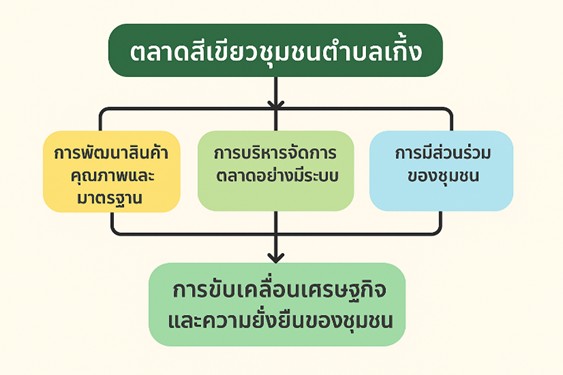
This study aims to investigate strategies for developing the green market into a central hub for distributing safe agricultural products and community-based goods, as well as to promote community participation in sustainable market management. The research employed a qualitative approach and collected data from 30 key informants, including local entrepreneurs, consumers, local administrative agencies, and relevant network partners. Data were gathered through questionnaires, in-depth interviews, and participatory observation. The findings reveal that 1) The green market plays a significant role in increasing household income, promoting the consumption of safe food, and strengthening consumer confidence. 2)Network partners from the public sector, private sector, and academic institutions support product standardization, quality certification, packaging development, branding, and online marketing, enabling the market to reach a wider consumer base. 3)Key challenges include maintaining consistent product standards, improving waste management systems, enhancing public relations, and strengthening the marketing skills of local entrepreneurs. 4)Recommended development strategies include upgrading standards for organic and community products, utilizing digital media for product promotion, implementing participatory market management driven by the community, and designing an environmentally friendly market space-such as reducing plastic use and improving waste management at the source.
Article Details

This work is licensed under a Creative Commons Attribution-NonCommercial-NoDerivatives 4.0 International License.
References
กรมการพัฒนาชุมชน. (2564). การพัฒนาตลาดชุมชนสีเขียวเพื่อส่งเสริมเศรษฐกิจฐานราก. กรุงเทพฯ: กระทรวงมหาดไทย.
กัญญารัตน์ นิ่มตระกูล, มณีรัตน์ ภารนันท์, สุภาวดี สายสนิท, จารุวรรณ นิธิไพบูลย์, อังคณา ลีรัตนานุกุลศิริ, ณชภัทร พิชญมหุตม์ และ ขวัญชีวา ไตรพิริยะ. (2567). กลยุทธ์การตลาดสีเขียวที่มีอิทธิพลต่อการตัดสินใจซื้อสินค้าชุมชน เพื่อสิ่งแวดล้อมในจังหวัดระยอง. วารสารศิลปะการจัดการ, 8(4), 18-40.
จุฬามณี แก้วโพนทอง, ทรงพล โชติกเวชกุล, ปัญญา คล้ายเดช และ พระสุนทร ชำกรม. (2561). การบริหารจัดการชุมชนเพื่อความยั่งยืน. วารสารวิชาการธรรมทรรศน์, 18(1), 263-273.
ชนนิกานต์ อินทรเผือก, ประเพศ ไกรจันทร์ และ ทวีศักดิ์ รูปสิงห์. (2564). รูปแบบการจัดการวิสาหกิจชุมชนเพื่อการเติบโตอย่างยั่งยืน. วารสารวิชาการครุศาสตร์อุตสาหกรรม พระจอมเกล้าพระนครเหนือ, 12(2), 46-56.
ชลิดา แย้มศรีสุข. (2568). การศึกษาความเข้มแข็งของกลุ่มตลาดเกษตรกรตัวจริงทุกสิ่งปลอดภัยจังหวัดมหาสารคาม. วารสารการวิจัยและพัฒนา กรมการพัฒนาชุมชน, 1(1), 141–152.
นิตยา เคหะบาล, อารยา ลาน้ำเที่ยง และ อาทิตย์ บุดดาดวง. (2564) การพัฒนาตลาดนัดสีเขียวอย่างมีส่วนร่วมของผู้ผลิตและผู้บริโภค กรณีเครือข่ายตลาดสีเขียวกมลาไสย อำเภอกมลาไสย จังหวัดกาฬสินธุ์. วารสารเทคโนโลยีภาคใต้, 14(2), 70-78.
รัตติกาล ตุ้มทอง. (2561). การสังเคราะห์งานวิจัยของสถาบันวิจัยวลัยรุกขเวช มหาวิทยาลัยมหาสารคามระหว่างปี พุทธศักราช 2545-2559. (ครุศาสตรมหาบัณฑิต, มหาวิทยาลัยมหาสารคาม).
วรพิทย์ มีมาก. (2553). ตลาดนัดสีเขียวกับการเสริมสร้างพลังอำนาจของประชาชน กรณีศึกษาจังหวัดสุรินทร์. วารสารเศรษฐศาสตร์และนโยบายสาธารณะ, 1(2), 101-114.
