The impact of ESG performance on the stock returns of Chinese companies
Article Sidebar
Main Article Content
บทคัดย่อ
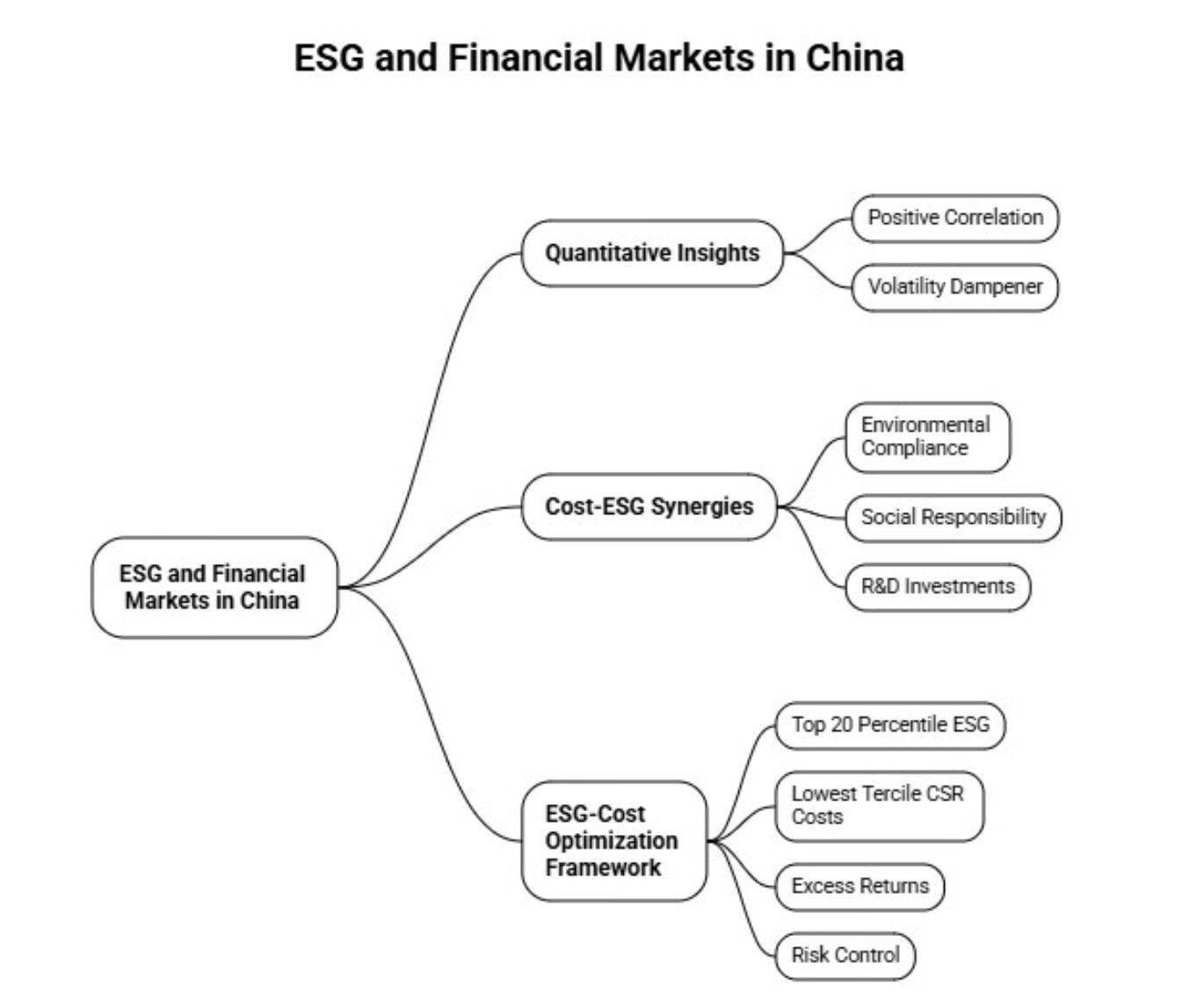
This study aims to investigate the impacts of ESG performance on a firm's stock returns. The main controlling variables are the firm's CSR-related costs. Data were collected through comprehensive literature reviews and analyzed using a combination of descriptive statistics and correlation analysis. The results of the study are as follows: The lack of a significant relationship between higher ESG scores and higher mean returns indicates that companies with better ESG performance are more likely to achieve higher financial returns. Investment in the costs associated with CSR does not yield a higher average return. This suggests that the costs incurred in fulfilling social and environmental responsibilities do not translate into financial improvement. Additionally, increasing accounting costs do not lead to a higher average ESG score, indicating that financial resources allocated for accounting and reporting processes do not necessarily improve the company's ESG rating. This study reveals the relationship between ESG performance, CSR investment, and capital market performance, providing a reference for related ESG values.
Article Details

อนุญาตภายใต้เงื่อนไข Creative Commons Attribution-NonCommercial-NoDerivatives 4.0 International License.
เอกสารอ้างอิง
Avramov, D., Cheng, S., Lioui, A., & Tarelli, A. (2022). Sustainable investing with ESG rating uncertainty. Journal of financial economics, 145(2), 642-664.
Bolton, P., & Kacperczyk, M. (2021). Do investors care about carbon risk?. Journal of financial economics, 142(2), 517-549.
Broadstock, D., Chan, K., Cheng, L., & Wang, X. (2020). The role of ESG performance during times of financial crisis: Evidence from COVID-19 in China. Finance Research Letters, 38, 101716.
DasGupta, R. (2022). Financial performance shortfall, ESG controversies, and ESG performance: Evidence from firms around the world. Finance Research Letters, 46, 102487.
Fafaliou, I., Giaka, M., Konstantios, D., & Polemis, M. (2022). Firms’ ESG reputational risk and market longevity: A firm-level analysis for the United States. Journal of Business Research, 149, 161-177.
Fama, E. F., & French, K. R. (1993). The cross-section of expected stock returns. Journal of Finance, 47(2), 427–465.
Fatemi, A., Fooladi, I., & Tehranian, H. (2015). CSR valuation effects. Journal of Banking & Finance, 59, 182–192.
Fatemi, A., Glaum, M., & Kaiser, S. (2018). ESG disclosure and value. Global Finance Journal, 38, 45–64.
He, F., Qin, S., Liu, Y., & Wu, J. (2022). CSR and idiosyncratic risk: Evidence from ESG information disclosure. Finance Research Letters, 49, 102936.
Hong, H., & Kacperczyk, M. (2009). The price of sin: The effects of social norms on markets. Journal of financial economics, 93(1), 15-36.
Ho, V. H. (2018). Sustainable finance & China's green credit reforms: A test case for bank monitoring of environmental risk. Cornell International Law Journal, 51(3), 609–681.
Jin, A. (2021). ESG investment preference in China. Finance and Economics, 11, 14–24.
Li, H., Zhang, X., & Zhao, Y. (2022). ESG and default risk. Finance Research Letters, 47, 102713.
Lioui, A., & Tarelli, A. (2022). Chasing the ESG factor. Journal of Banking & Finance, 139, 106498.
Lööf, H., Sahamkhadam, M., & Stephan, A. (2022). Is Corporate Social Responsibility investing a free lunch? The relationship between ESG, tail risk, and upside potential of stocks before and during the COVID-19 crisis. Finance Research Letters, 46, 102499.
Ma, X., Wang, J., & Qin, E. (2016). ESG disclosure in China. China Finance, 16, 33–34.
McWilliams, A., & Siegel, D. (2000). CSR and firm performance. Strategic Management Journal, 21(5), 603–609.
Pedersen, L. H., Fitzgibbons, S., & Pomorski, L. (2021). Responsible investing: The ESG-efficient frontier. Journal of financial economics, 142(2), 572-597.
Qiu, M., & Yin, H. (2019). ESG performance and financing cost of enterprises under the background of ecological civilization construction. Quantitative Economic and Technical Economics Research, 36(1), 108-123.
Sadorsky, P. (2021). ESG risk pricing. Review of Financial Economics, 39(1), 44–57.
Yang, Y., Orzes, G., Jia, F., & Chen, L. (2021). Does GRI sustainability reporting pay off? An empirical investigation of publicly listed firms in China. Business & Society, 60(7), 1738-1772.
Zhang, X., Zhao, X., & Qu, L. (2021). Do green policies catalyze green investment? Evidence from ESG investing developments in China. Economics Letters, 207, 110028.
